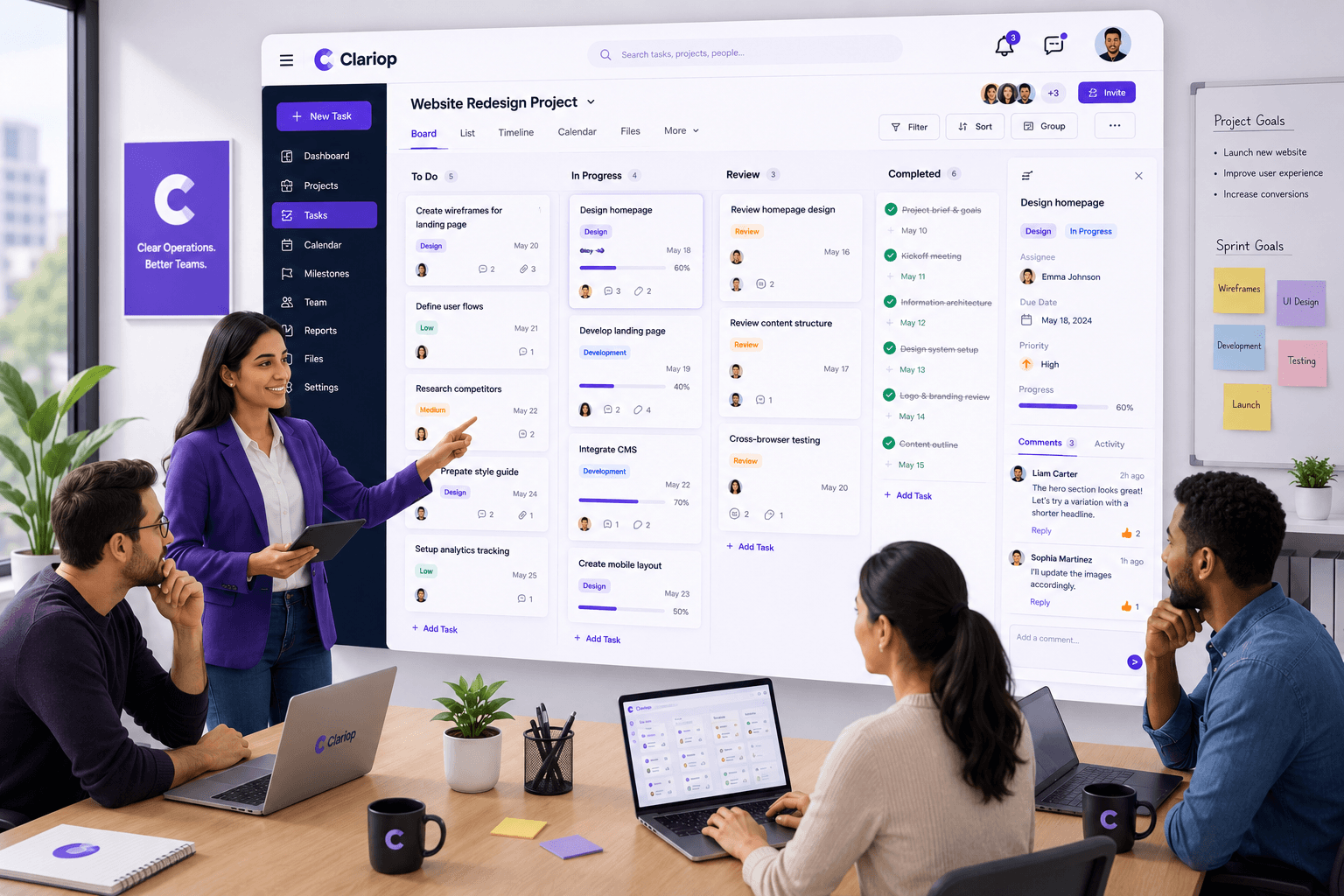
Managing projects successfully is no longer just about creating a task list and hoping everything gets completed on time. Modern businesses operate in fast-paced environments where multiple projects, distributed teams, changing priorities, and increasing customer expectations demand a more structured approach.
Whether you're running a software company, a marketing agency, a manufacturing business, or an internal operations team, effective project management helps you organize work, improve collaboration, reduce delays, and deliver consistent results.
This guide explains the fundamentals of project management, common challenges businesses face, proven best practices, and how the right project management software can help teams stay organized and productive.
Project management is the process of planning, organizing, executing, monitoring, and successfully completing a project within defined goals, timelines, and available resources.
Every project typically includes:
- Clear objectives
- Defined scope
- Assigned responsibilities
- Milestones
- Deadlines
- Resource allocation
- Progress tracking
- Final delivery
Successful project management ensures that everyone involved understands what needs to be done, who is responsible, and when each task should be completed.
Many organizations still rely on spreadsheets, emails, messaging apps, and scattered documents to manage projects. While this might work for small teams initially, it quickly becomes difficult as projects grow.
Poor project management often results in:
- Missed deadlines
- Duplicate work
- Confused responsibilities
- Communication gaps
- Budget overruns
- Reduced client satisfaction
- Low employee productivity
A structured project management process helps eliminate these issues by creating visibility across the entire project lifecycle.
1. Project Initiation
Every successful project begins with a clearly defined objective.
During this stage, teams identify:
- Business goals
- Project scope
- Expected outcomes
- Stakeholders
- Initial timeline
Without a clear starting point, projects often suffer from scope creep and unclear expectations.
2. Project Planning
Planning transforms ideas into actionable steps.
A good project plan includes:
- Project timeline
- Task breakdown
- Team assignments
- Priority levels
- Resource planning
- Risk assessment
This stage creates the roadmap that guides the entire project.
3. Project Execution
Execution is where the actual work begins.
Team members collaborate to complete assigned tasks while managers monitor progress, remove obstacles, and ensure work stays aligned with project goals.
Real-time visibility is essential during execution because priorities can change quickly.
4. Project Monitoring
Project monitoring involves continuously measuring progress against the original plan.
Managers typically monitor:
- Task completion
- Team workload
- Project health
- Budget utilization
- Risks
- Deadlines
Regular reviews help identify issues before they become major problems.
5. Project Closure
Once all deliverables are completed, the project moves into closure.
This stage includes:
- Final approvals
- Documentation
- Lessons learned
- Performance evaluation
- Client feedback
Project closure provides valuable insights that improve future projects.
Most businesses experience similar obstacles regardless of industry.
Unclear Responsibilities
When ownership isn't defined, tasks often remain incomplete because everyone assumes someone else is handling them.
Poor Communication
Important updates buried in long email chains or chat messages create confusion and delays.
Lack of Visibility
Managers struggle when they cannot quickly determine:
- Which tasks are pending
- Who is overloaded
- Which deadlines are at risk
Changing Priorities
Business priorities evolve constantly.
Without centralized project management software, updating plans becomes time-consuming.
Missed Deadlines
Missed deadlines usually result from poor planning rather than lack of effort.
Regular progress tracking helps identify delays early enough to take corrective action.
Successful organizations consistently follow a few core principles:
- Define project goals before assigning tasks.
- Break large projects into smaller, manageable milestones.
- Assign clear ownership for every task.
- Set realistic deadlines.
- Monitor progress regularly.
- Encourage team collaboration through comments and updates.
- Keep all project documents in one place.
- Review project performance after completion.
These practices improve transparency, accountability, and execution.
The software you choose should simplify work—not make it more complicated.
Look for a solution that offers:
- Project planning
- Task management
- Team coordination
- Activity tracking
- File sharing
- Calendar integration
- Reporting
- Role-based permissions
Most importantly, the platform should be easy for your entire team to adopt.
Clariop is designed to help teams manage projects with clarity and confidence.
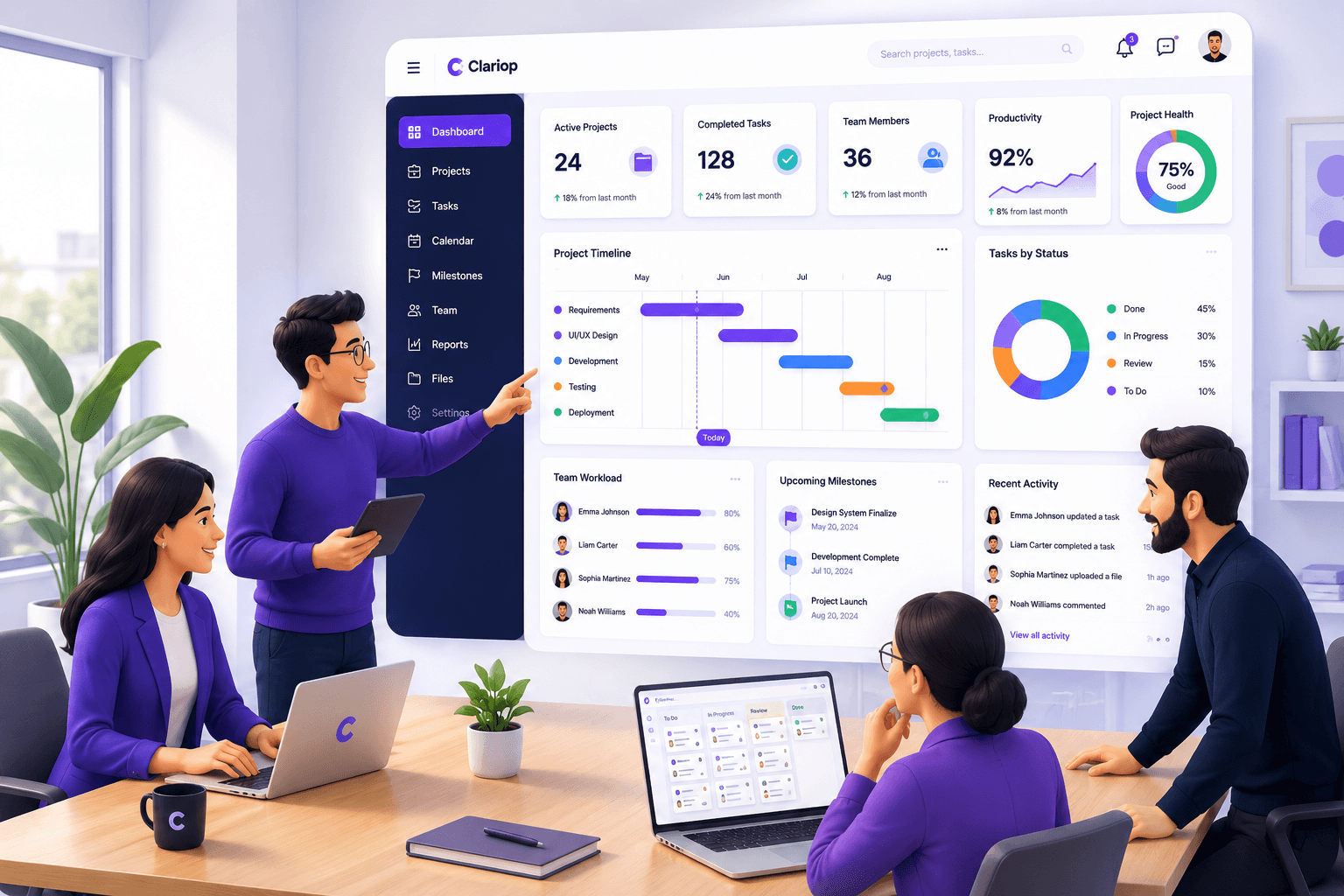
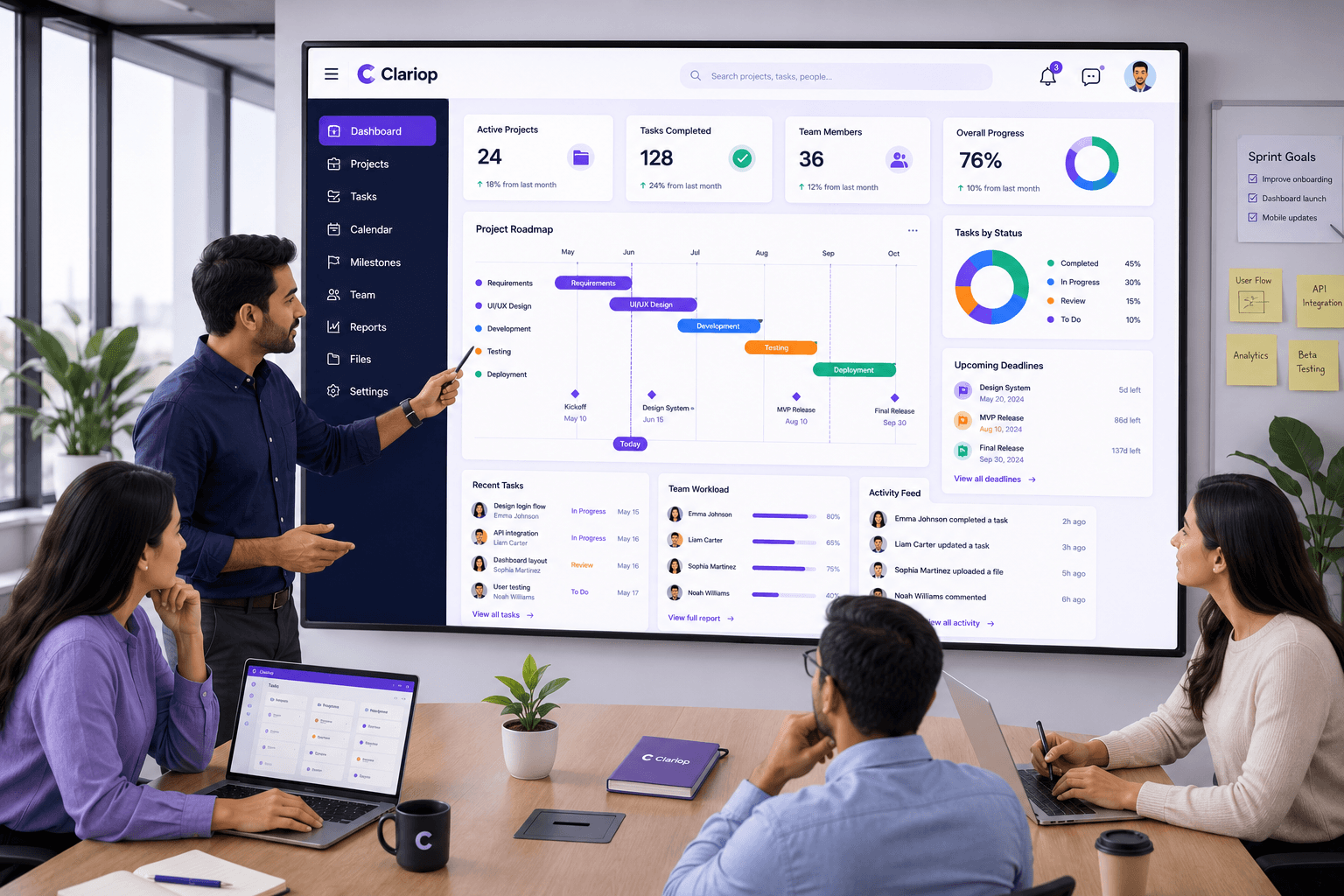
Instead of switching between multiple disconnected tools, Clariop brings project management, task tracking, team coordination, documents, calendars, activity updates, and reporting together in one centralized workspace.
Whether you're managing a small internal project or coordinating operations across multiple departments, Clariop helps teams stay organized, improve accountability, and deliver projects more efficiently.
Project management is much more than tracking deadlines. It creates structure, improves communication, and enables teams to deliver consistent results.
Businesses that invest in better project management practices often experience higher productivity, improved customer satisfaction, and stronger collaboration across teams.
As organizations continue to grow, adopting a centralized project management platform becomes an essential step toward operational excellence.
What is project management?
Project management is the process of planning, organizing, executing, monitoring, and completing projects to achieve specific business objectives within defined timelines and resources.
Why is project management important?
It improves organization, accountability, collaboration, productivity, and the successful delivery of projects.
What are the five stages of project management?
Initiation, Planning, Execution, Monitoring, and Closure.
How can project management software help?
It centralizes projects, tasks, communication, documents, and reporting, making it easier for teams to stay aligned and productive.
Start your 30-day free trial with Clariop and discover how one platform can help your team plan projects, manage tasks, collaborate efficiently, and keep operations organized—all in one place.

 Sarah Mitchell