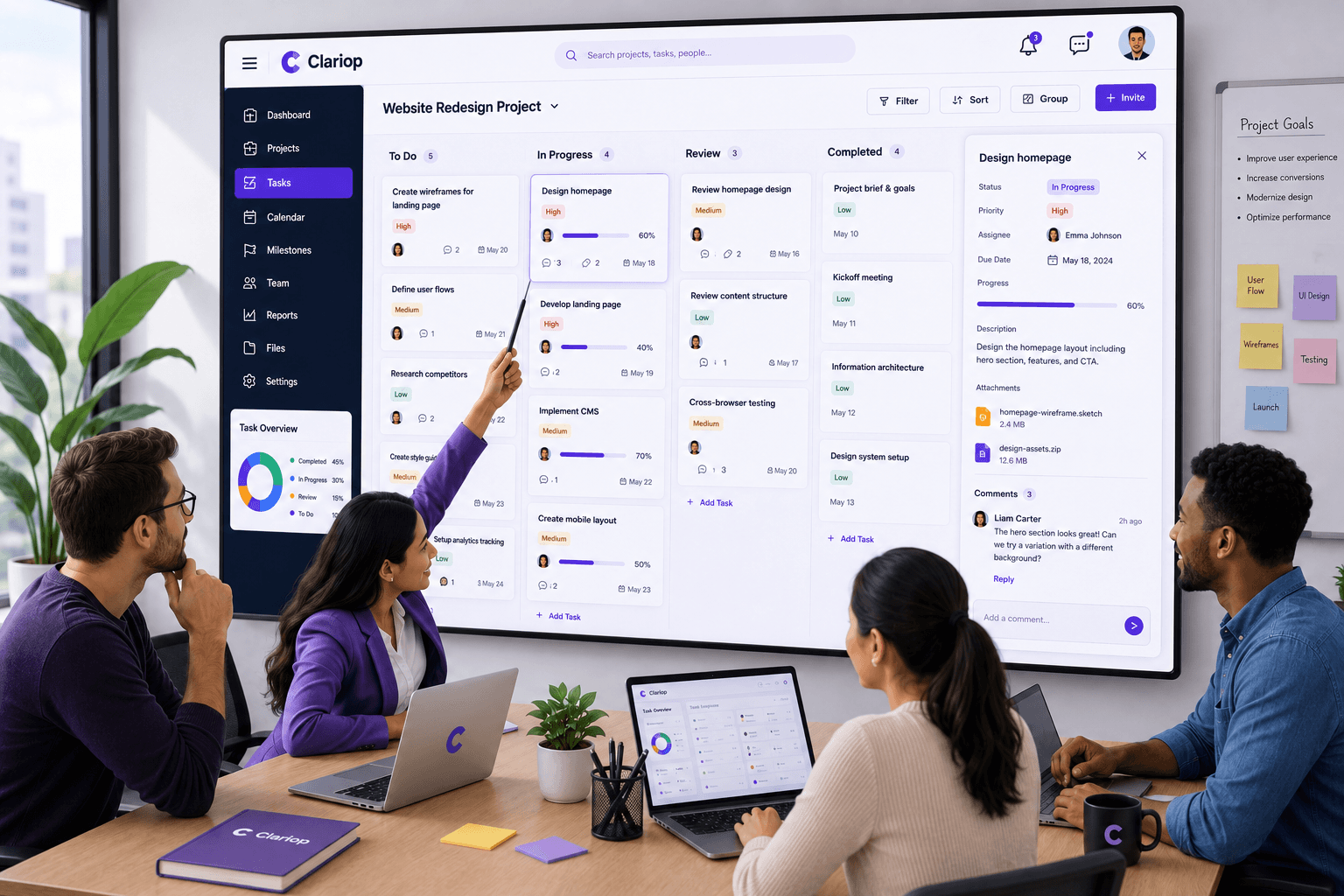
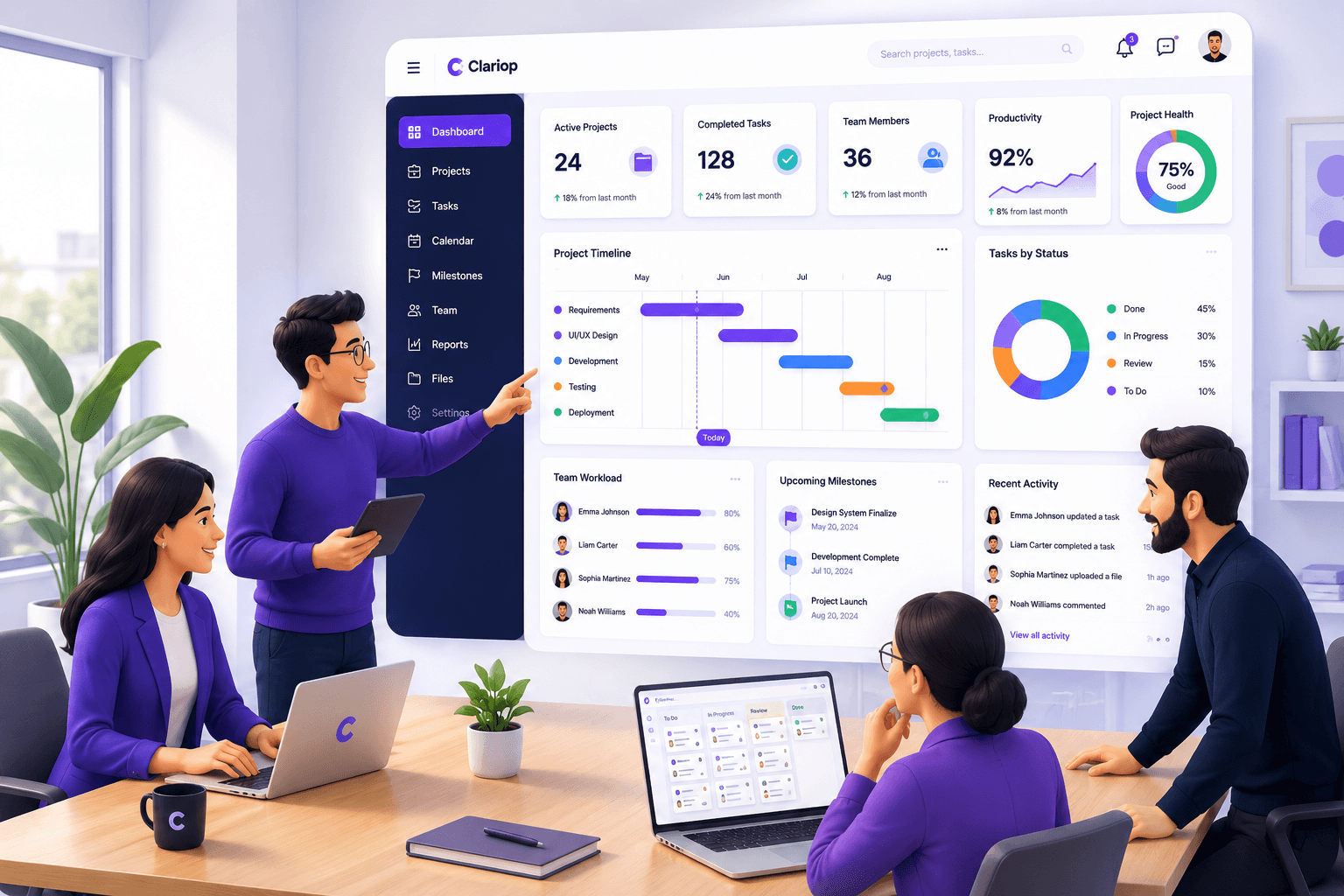
Every successful project is built on hundreds of well-managed tasks. While project management focuses on the overall objective, task management ensures that the daily work required to achieve those objectives is completed efficiently.
Whether you're managing a small team, coordinating client work, or running an entire business, task management helps organize responsibilities, improve accountability, and keep work moving forward.
In today's fast-paced business environment, relying on spreadsheets, emails, or handwritten notes is no longer enough. Modern organizations need structured systems that help teams prioritize work, monitor progress, and collaborate effectively.
This guide explains what task management is, why it's essential, and how businesses can improve productivity through better task organization.
Task management is the process of creating, organizing, assigning, tracking, and completing individual pieces of work within a project or daily operation.
Every task typically includes:
- A clear title
- Description
- Assigned team member
- Priority
- Due date
- Current status
- Comments
- Attachments
Together, these elements provide clarity and ensure everyone understands what needs to be done.
Without proper task management, teams often experience:
- Forgotten responsibilities
- Missed deadlines
- Duplicate work
- Poor communication
- Unclear ownership
- Reduced productivity
Structured task management provides visibility into daily work and helps teams stay focused on priorities.
Clear Task Creation
Every task should include enough information for the assignee to begin work confidently.
Include:
- Objective
- Requirements
- Expected outcome
- Relevant files
- Priority level
Task Assignment
Assign each task to one responsible owner.
This improves accountability and prevents confusion.
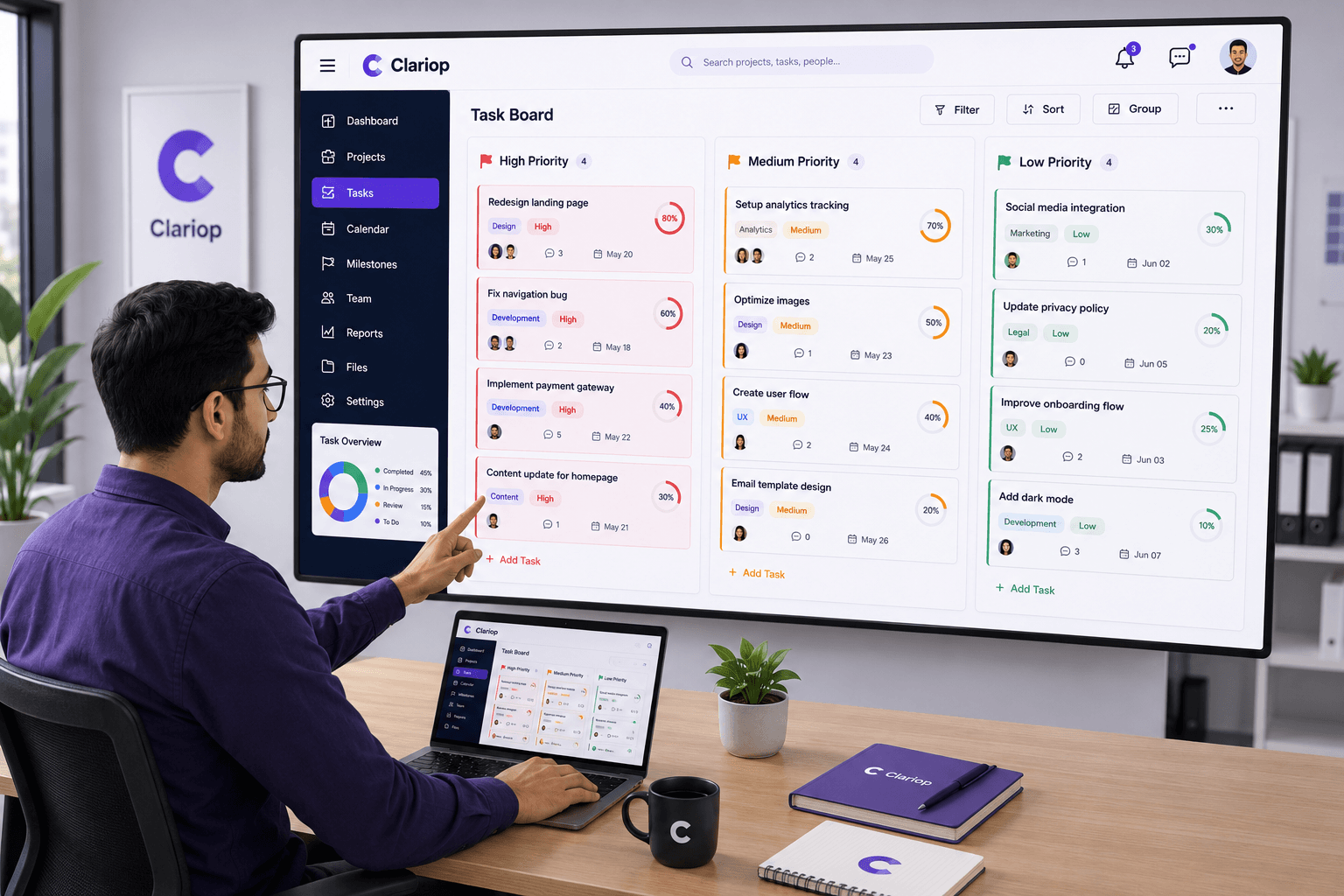
Priority Management
Organize tasks based on urgency and business impact.
Examples:
- High Priority
- Medium Priority
- Low Priority
Prioritization helps teams focus on the most important work first.
Progress Tracking
Managers should always know:
- What is completed
- What is in progress
- What is pending
- What requires attention
Real-time visibility reduces project delays.
Team Collaboration
Task management is more than assigning work.
Teams should be able to:
- Comment on tasks
- Share updates
- Attach documents
- Mention colleagues
- Review activity history
This keeps all communication connected to the task itself.
Many businesses struggle because they rely on disconnected tools.
Common issues include:
- Tasks tracked in spreadsheets
- Updates shared through email
- Files stored separately
- Progress discussed in meetings
- No centralized visibility
These problems create unnecessary delays and reduce efficiency.
Successful teams consistently follow these practices:
Break Large Work into Smaller Tasks
Smaller tasks are easier to assign, monitor, and complete.
Define Clear Expectations
Every task should clearly explain what success looks like.
Statuses, comments, and attachments should always reflect the latest progress.
Review Work Regularly
Frequent reviews help identify blockers before deadlines are missed.
Encourage Accountability
Assign ownership to individuals rather than groups whenever possible.
Projects succeed when daily work is completed consistently.
Effective task management helps teams:
- Improve productivity
- Reduce confusion
- Increase transparency
- Deliver work faster
- Strengthen collaboration
- Improve client satisfaction
Simply put, strong project management depends on strong task management.
Manual task tracking quickly becomes difficult as organizations grow.
Task management software allows businesses to:
- Create tasks instantly
- Assign responsibilities
- Set priorities
- Monitor progress
- Share documents
- Collaborate through comments
- Maintain a complete activity history
Instead of scattered information, teams work from one centralized platform.
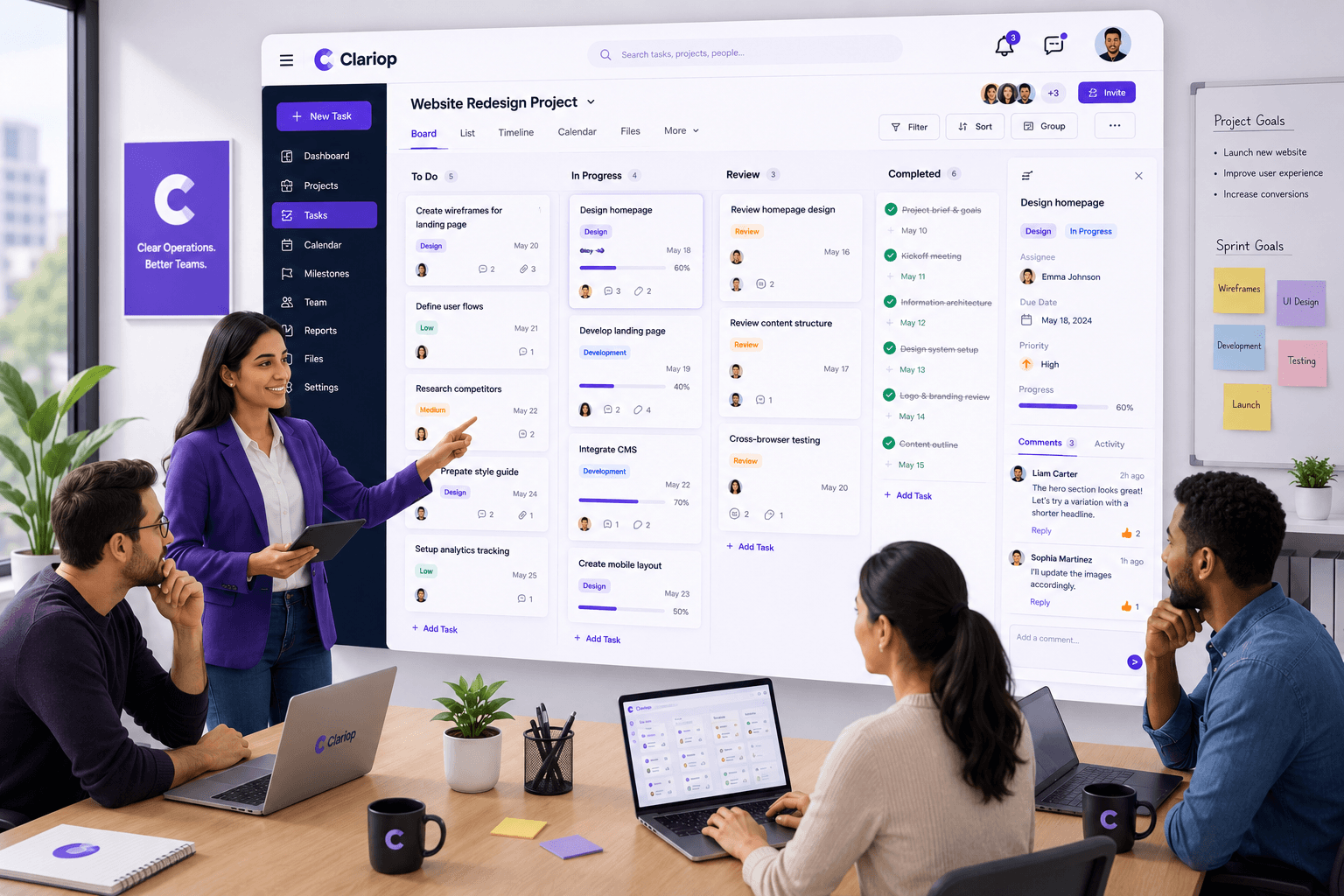
Clariop helps organizations manage daily work through a simple, organized task management system.
Managers can create tasks, assign responsibilities, set priorities, attach files, monitor progress, and collaborate using comments and activity updates—all from one workspace.
Unlike complicated enterprise tools, Clariop is designed to be intuitive, making it easier for teams to adopt without lengthy training.
Whether you're coordinating internal operations or managing client projects, Clariop keeps everyone aligned and focused on what matters most.
Task management is one of the most important foundations of successful business operations.
When tasks are clearly defined, properly assigned, and consistently monitored, teams become more productive, projects stay on schedule, and organizations achieve better results.
Investing in structured task management is not just about staying organized—it's about creating a culture of accountability, transparency, and continuous progress.
What is task management?
Task management is the process of creating, assigning, organizing, tracking, and completing work efficiently within a team or project.
Why is task management important?
It improves productivity, accountability, collaboration, and project delivery while reducing confusion and missed deadlines.
What should every task include?
A task should include a title, description, owner, priority, due date, status, and any relevant files or comments.
Is task management different from project management?
Yes. Project management focuses on the overall project, while task management focuses on the individual activities that make the project successful.
Managing daily work becomes easier when every task, comment, document, and update is connected in one place. Start your 30-day free trial with Clariop and discover a simpler way to organize work, improve accountability, and keep your team productive.

 Sarah Mitchell