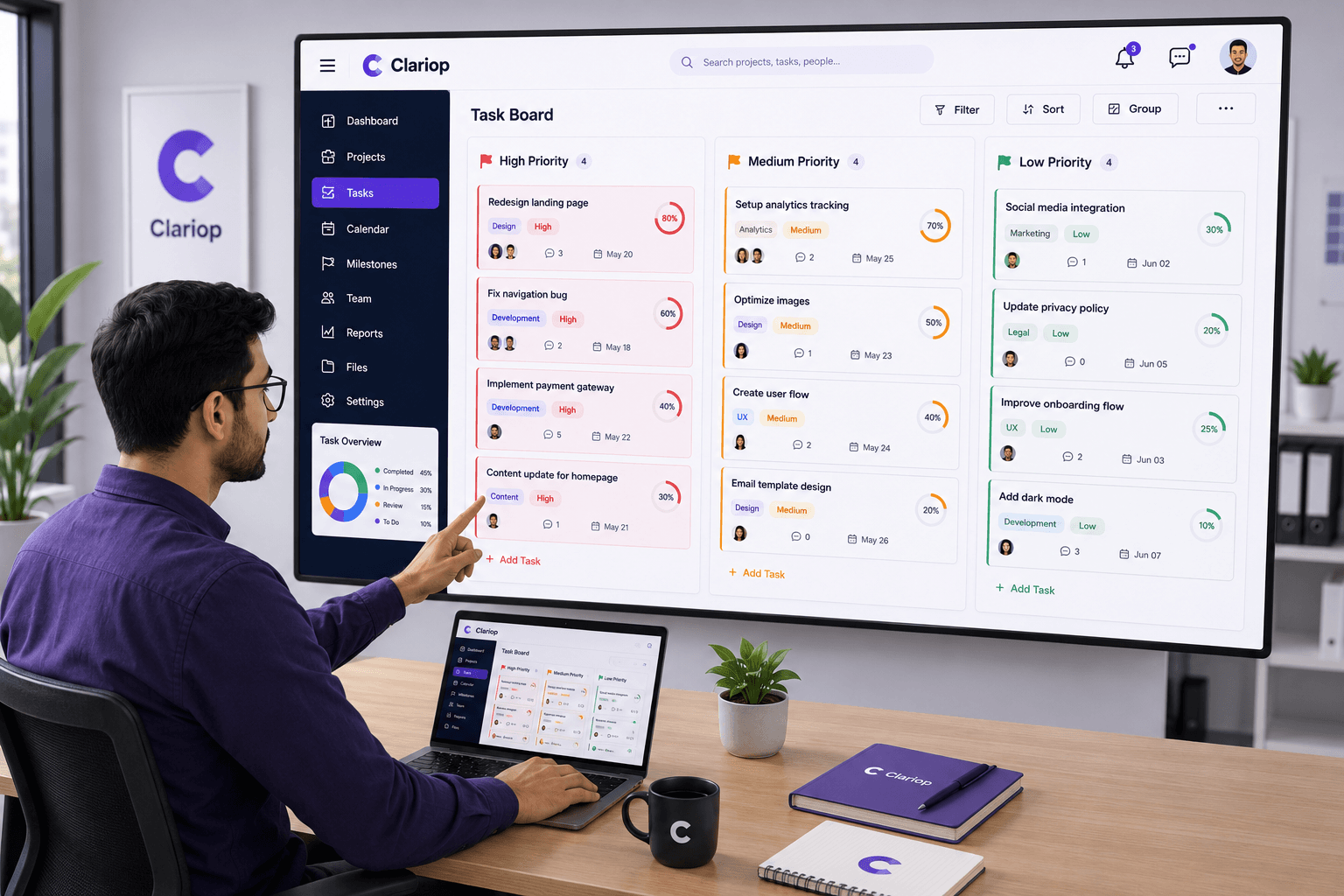
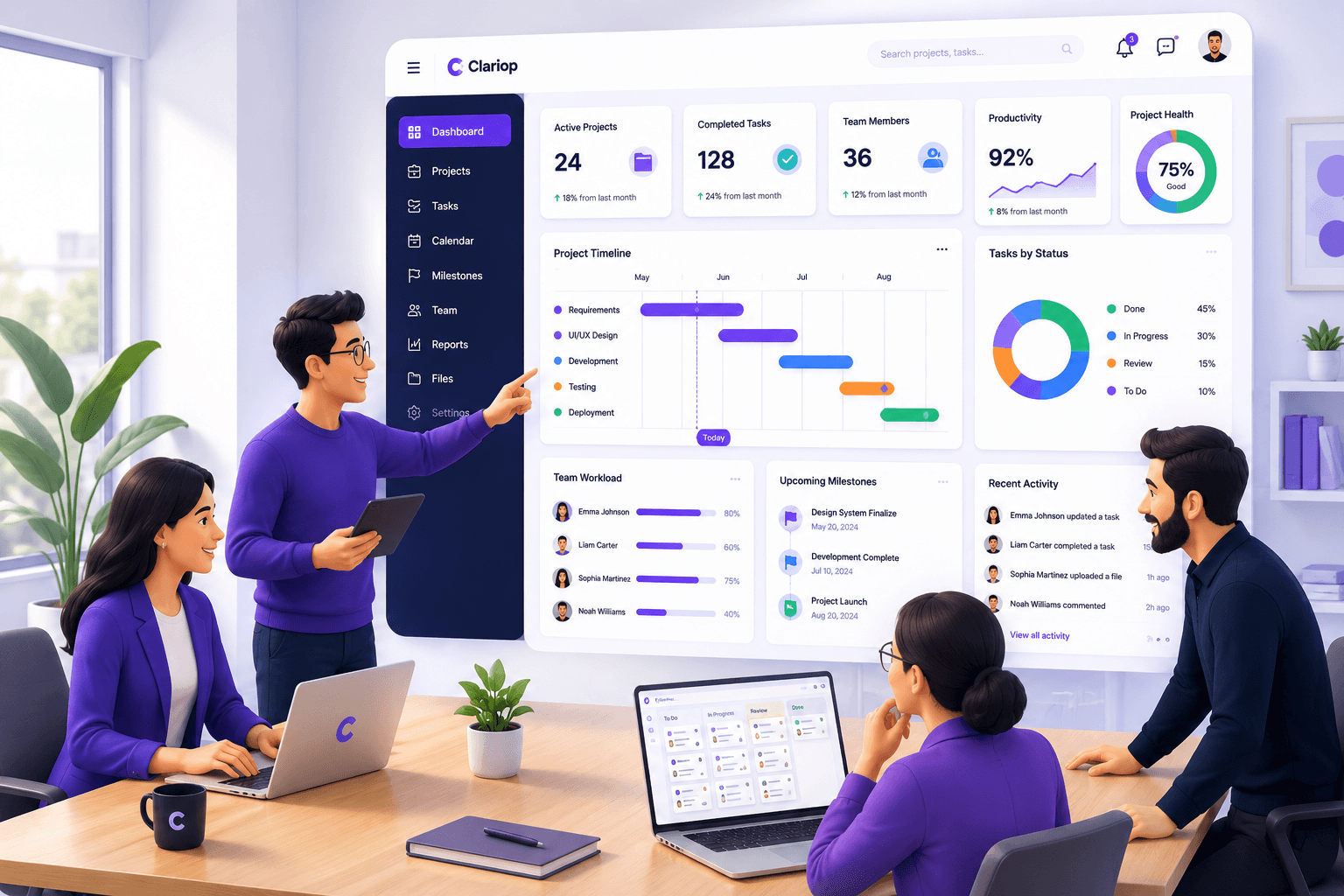
Managing tasks may sound simple, but as organizations grow, keeping everyone aligned becomes increasingly challenging. Without a structured approach, even small tasks can become bottlenecks that delay projects and reduce team productivity.
High-performing organizations don't just assign work—they manage it strategically. They establish clear priorities, encourage accountability, and use modern tools to provide visibility across every stage of execution.
In this guide, we'll explore ten practical task management best practices that can help your team work smarter, stay organized, and consistently deliver better results.
A task represents a commitment. When dozens or even hundreds of tasks are being handled simultaneously, small inefficiencies quickly become significant operational challenges.
Without a clear process, organizations often experience:
- Missed deadlines
- Duplicate work
- Poor communication
- Lack of accountability
- Reduced productivity
- Delayed project delivery
Following proven task management practices creates consistency and helps teams focus on the right work at the right time.
Every task should explain:
- What needs to be done
- Why it matters
- Expected outcome
- Relevant files
- Any dependencies
Well-defined tasks eliminate confusion and reduce unnecessary questions.
Shared ownership often leads to unclear accountability.
Each task should have one primary owner who is responsible for driving it to completion, even if other team members contribute.
Not every task deserves immediate attention.
Classify work using simple priority levels:
This helps teams make better day-to-day decisions without constant manager intervention.
Large assignments often feel overwhelming and difficult to track.
Instead, divide complex work into manageable subtasks with clear milestones. This improves visibility and creates a sense of progress.
One of the biggest productivity killers is searching through emails or chat messages for context.
Whenever possible, keep:
- Comments
- Questions
- Decisions
- File attachments
- Status updates
linked directly to the task itself.
This creates a complete history that anyone can review at any time.
Successful teams don't wait until deadlines arrive.
Managers should regularly review:
- Completed work
- Tasks in progress
- Blocked activities
- Upcoming deadlines
- Team workload
Frequent reviews allow issues to be resolved before they affect the overall project.
Visibility improves accountability.
When everyone can see project progress, responsibilities, and recent updates, collaboration becomes more efficient and misunderstandings decrease.
Transparency also reduces the need for unnecessary status meetings.
8. Maintain Realistic Workloads
Overloading high-performing employees often leads to burnout and reduced quality.
Distribute work fairly across the team and adjust assignments when priorities change.
Balanced workloads improve long-term productivity.
Once tasks are completed, take time to review:
- What went well
- What caused delays
- Opportunities for improvement
- Process changes for future work
Continuous improvement helps organizations become more efficient over time.
As businesses grow, manual tracking becomes difficult.
Task management software allows teams to:
- Create and organize tasks
- Assign responsibilities
- Set priorities
- Attach files
- Share comments
- Track activity
- Monitor progress in real time
Instead of switching between multiple tools, everyone works from one connected workspace.
Many organizations unintentionally create unnecessary complexity by:
- Creating vague tasks
- Assigning multiple owners
- Ignoring priorities
- Failing to update task statuses
- Communicating outside the task
- Overloading key team members
- Skipping regular reviews
Avoiding these mistakes can significantly improve execution and accountability.
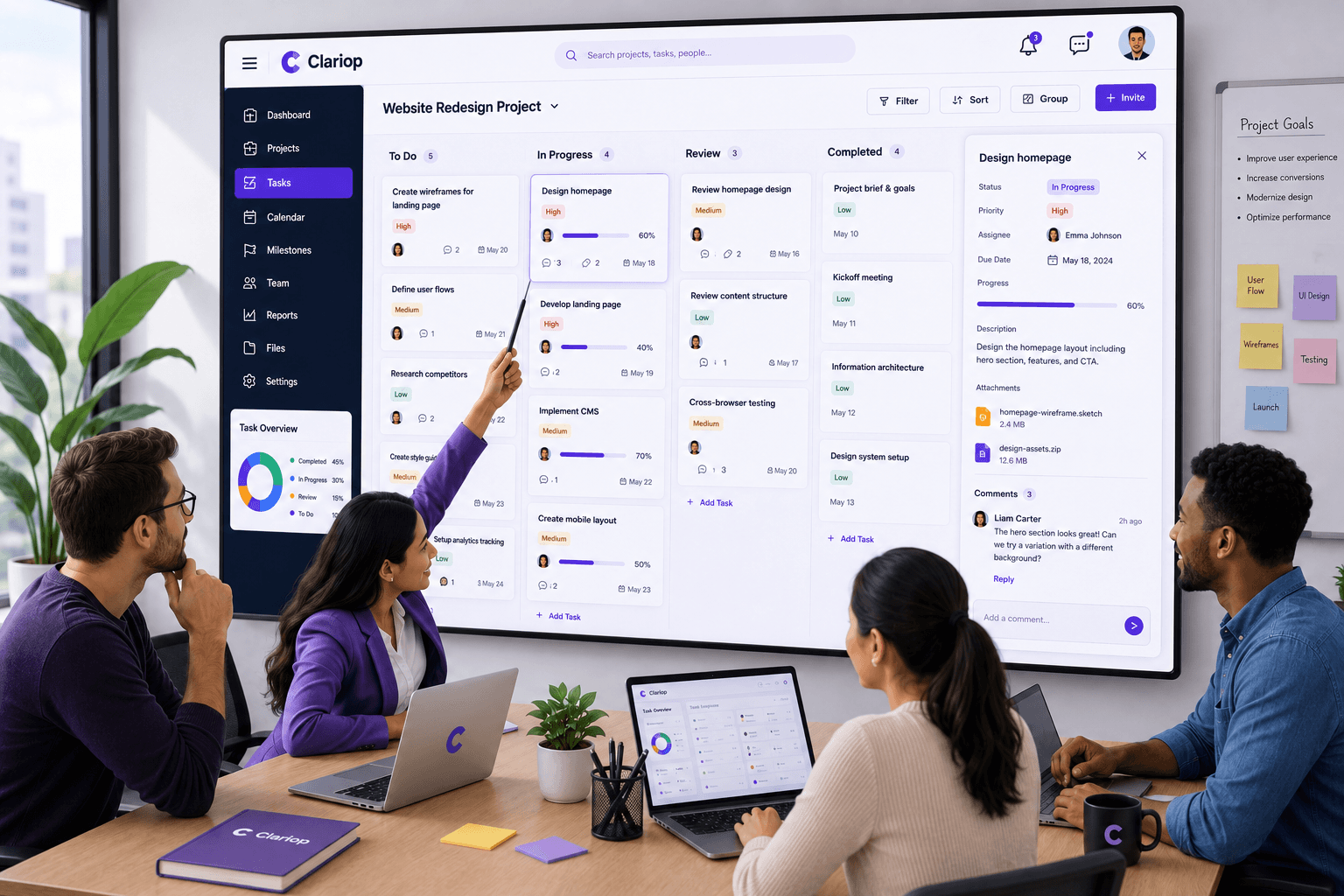
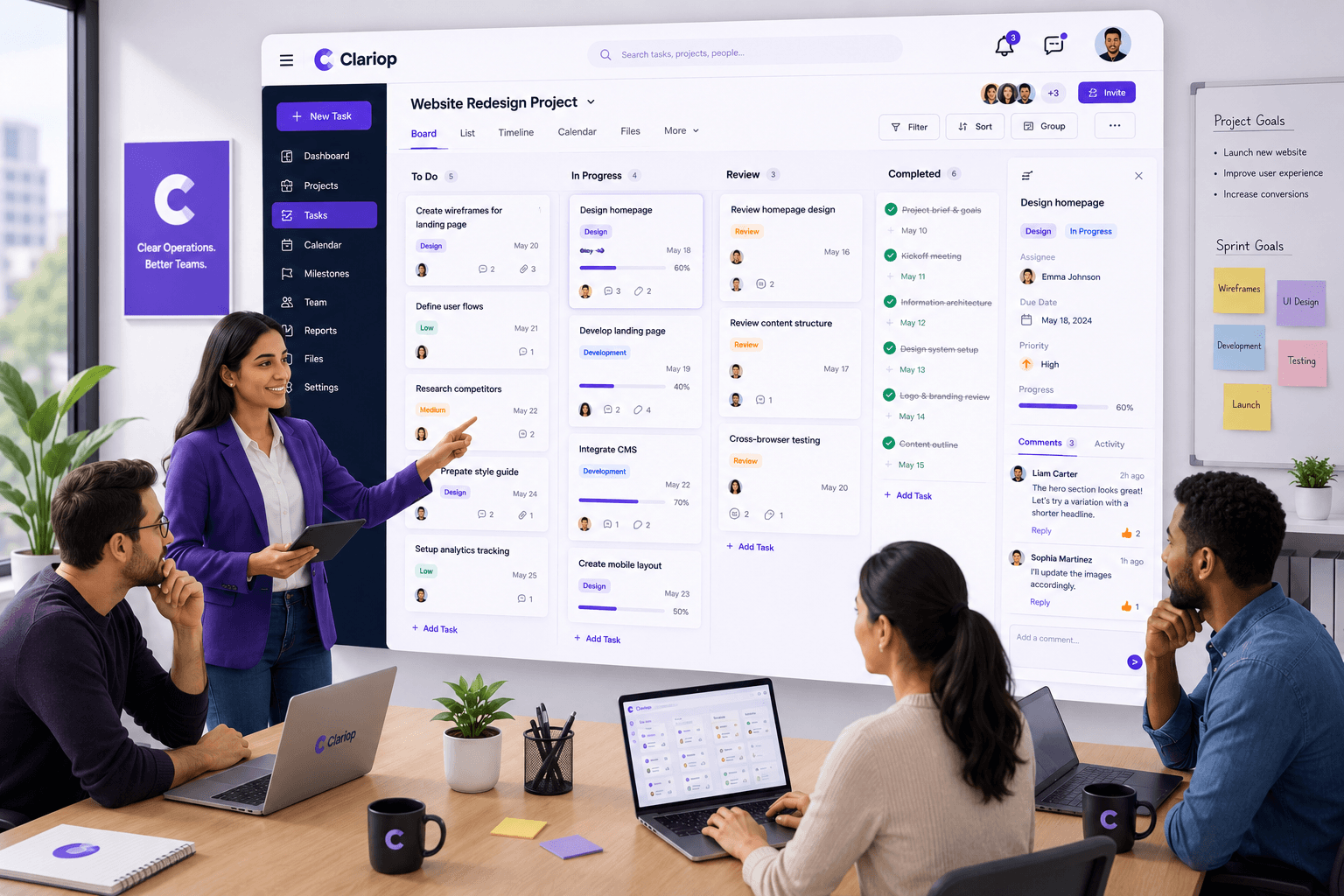
Clariop is designed to make daily work simple, organized, and transparent.
With Clariop, teams can:
- Create detailed tasks
- Assign responsibilities
- Set priorities
- Attach documents
- Collaborate through comments
- View activity updates in real time
- Monitor progress from a centralized workspace
Rather than juggling multiple applications, Clariop provides one connected environment where teams can stay aligned and productive.
Task management is the foundation of successful project execution.
Organizations that consistently define work clearly, assign ownership, communicate transparently, and review progress regularly create stronger teams and deliver better business outcomes.
By combining proven task management practices with intuitive software, businesses can improve productivity, reduce operational friction, and build a culture of accountability.
What are task management best practices?
Task management best practices are proven methods that help teams organize, prioritize, assign, track, and complete work more efficiently.
Why is accountability important in task management?
Clear ownership ensures that every task has someone responsible for driving it to completion, reducing confusion and improving follow-through.
How often should task progress be reviewed?
Regular reviews—daily for fast-moving teams or weekly for longer projects—help identify issues early and keep work on track.
Can task management software improve team productivity?
Yes. It centralizes tasks, communication, files, and progress tracking, making collaboration easier and reducing time spent searching for information.
Effective task management starts with the right process—and the right platform. Start your 30-day free trial with Clariop and bring tasks, priorities, comments, documents, and progress together in one centralized workspace designed for modern teams.

 Sarah Mitchell