Successful projects are rarely the result of luck. Behind every well-executed project is a team that follows proven project management practices, communicates effectively, and stays focused on clearly defined objectives.
Many organizations invest in talented people but still struggle with delayed projects, unclear responsibilities, missed deadlines, and inefficient workflows. In most cases, the problem isn't the team's capability—it's the lack of a structured project management approach.
Whether you're managing client work, software development, marketing campaigns, or internal operations, following the right project management best practices can significantly improve productivity, collaboration, and project outcomes.
This guide explores ten practical best practices that successful teams consistently apply to deliver projects with confidence.
Every successful project begins with a shared understanding of what success looks like.
Clearly define:
- Business goals
- Expected outcomes
- Project scope
- Success criteria
- Stakeholders
When objectives are well documented, team members can make better day-to-day decisions without constant clarification.
Large projects often feel overwhelming because they contain too much work at once.
Instead of managing one large project, divide it into:
- Milestones
- Phases
- Individual tasks
- Subtasks
Smaller tasks make planning easier and improve progress tracking.
One of the most common reasons projects stall is unclear responsibility.
Every task should have one primary owner.
This creates accountability and helps everyone know exactly who is responsible for completing each activity.
Not every task deserves equal attention.
Categorize work into priorities such as:
- High Priority
- Medium Priority
- Low Priority
Focusing on high-impact work first helps teams deliver greater value without becoming distracted by less important tasks.
Information scattered across emails, spreadsheets, chat applications, and personal notes creates confusion.
Instead, keep project discussions, files, comments, activity updates, and task progress in one centralized platform.
A single source of truth reduces misunderstandings and improves collaboration.
Waiting until the project deadline to review progress is a common mistake.
Successful project managers schedule regular progress reviews to monitor:
- Completed work
- Upcoming deadlines
- Risks
- Bottlenecks
- Team workload
Early visibility allows problems to be resolved before they impact delivery.
Projects perform better when everyone has visibility into what's happening.
Encourage team members to:
- Share updates
- Ask questions
- Comment on tasks
- Document decisions
- Notify stakeholders of changes
Transparent communication builds trust and reduces unnecessary meetings.
Every project contains uncertainty.
Identify potential risks early, such as:
- Resource shortages
- Budget constraints
- Technical challenges
- Client approval delays
- Dependency conflicts
Planning for risks allows teams to respond quickly when unexpected situations arise.
Project completion isn't the end of the learning process.
Conduct a short review after every project to discuss:
- What worked well
- What could improve
- Which processes should change
- Lessons learned
Continuous improvement strengthens future projects and helps teams avoid repeating mistakes.
Even the best processes become difficult to maintain when teams rely on disconnected tools.
Modern project management software helps organizations:
- Organize projects
- Assign tasks
- Track progress
- Share files
- Collaborate in real time
- Generate reports
- Improve accountability
Choosing software that is intuitive and easy to adopt is just as important as choosing software with powerful features.
Many organizations unintentionally reduce project success by making avoidable mistakes, including:
- Starting projects without clear goals
- Assigning multiple owners to the same task
- Ignoring project risks
- Failing to monitor progress regularly
- Overloading key team members
- Keeping communication spread across multiple platforms
- Not reviewing completed projects
Avoiding these mistakes creates a more predictable and efficient project environment.
Clariop is designed to help organizations implement these best practices naturally.
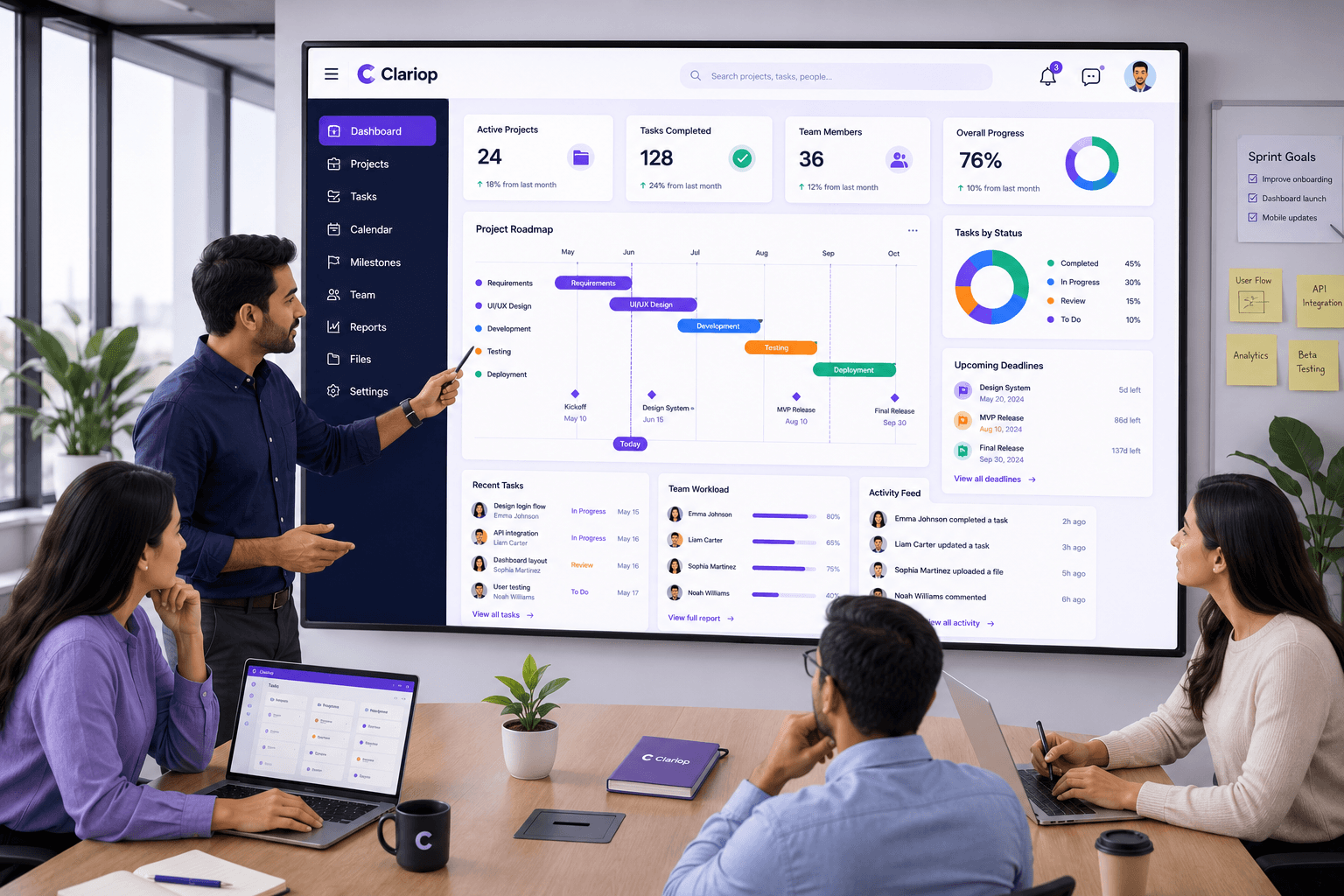
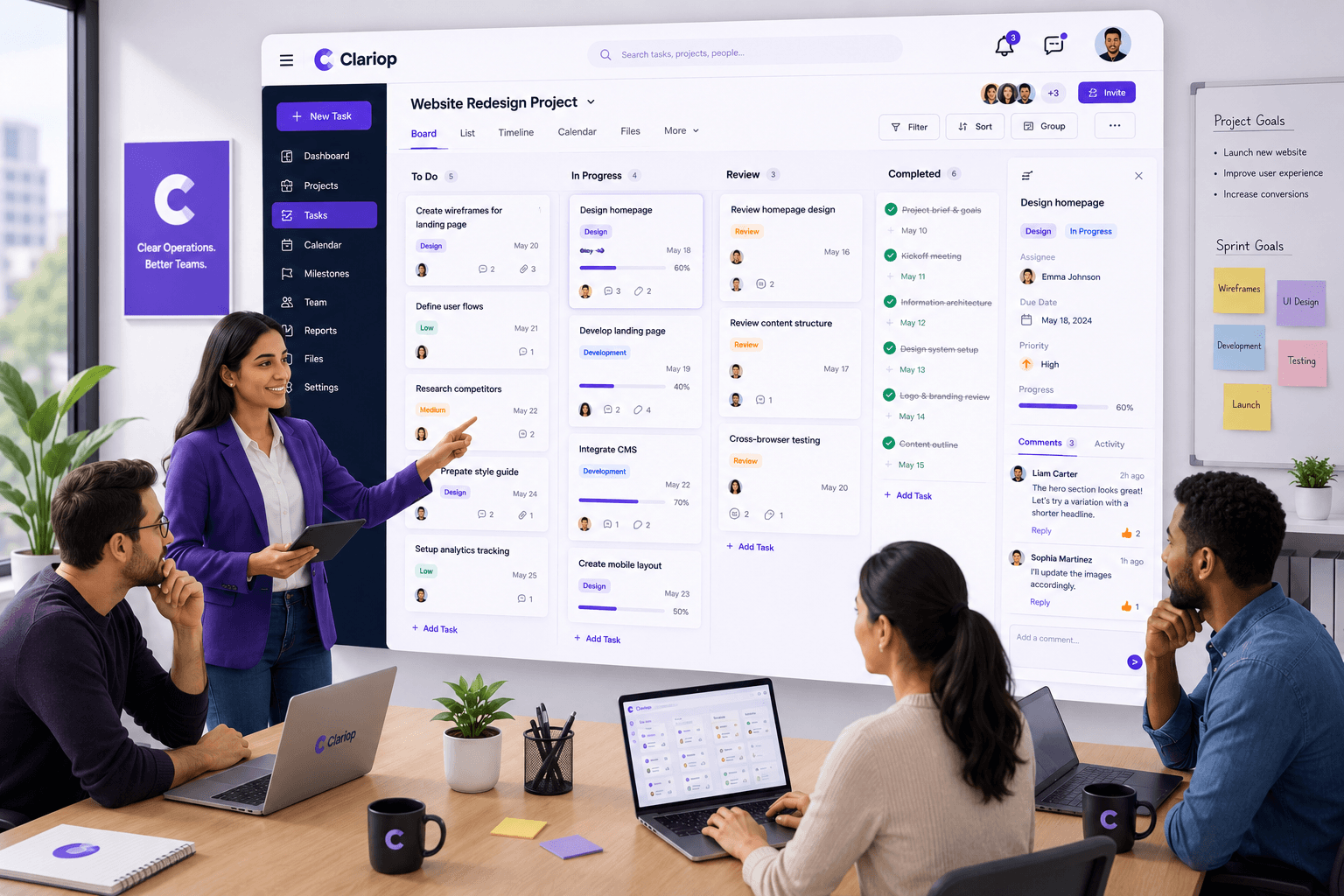
Instead of switching between multiple disconnected applications, teams can manage projects, tasks, team members, comments, files, calendars, activity updates, and reports from one centralized workspace.
By providing complete visibility across every stage of a project, Clariop helps managers improve accountability, streamline collaboration, and keep projects moving forward with confidence.
Strong project management isn't about working harder—it's about working smarter.
Organizations that consistently follow structured planning, clear communication, accountability, and continuous improvement are far more likely to deliver successful projects on time and within budget.
Whether you're leading a small team or managing complex operations across multiple departments, adopting proven project management best practices creates a stronger foundation for long-term success.
What are project management best practices?
Project management best practices are proven methods that help teams plan, execute, monitor, and complete projects more efficiently and consistently.
Why are best practices important?
They improve collaboration, reduce risks, increase productivity, and help teams deliver projects successfully.
How often should project progress be reviewed?
Most teams benefit from reviewing progress weekly or at the end of each major milestone, depending on project complexity.
Yes. Modern project management software centralizes planning, communication, reporting, and task management, making it easier for teams to stay organized and productive.
The best project management practices become even more effective when supported by the right platform. Start your 30-day free trial with Clariop and manage projects, tasks, teams, and operations from one centralized workspace designed for growing businesses.


 Sarah Mitchell