Managing clients successfully involves much more than delivering projects on time. Today's clients expect transparency, consistent communication, organized workflows, and proactive support throughout every stage of the relationship.
Businesses that invest in better client management often enjoy stronger customer loyalty, higher retention rates, increased referrals, and repeat business. On the other hand, poor client management can quickly damage trust—even when the quality of work is excellent.
The good news is that improving client management doesn't require complicated processes. Small, consistent improvements can significantly strengthen client relationships and create a more professional customer experience.
This guide explores ten practical strategies that every growing business can implement.
Clients don't just evaluate the final outcome—they evaluate the entire experience.
They remember:
- How quickly you responded
- Whether deadlines were met
- How organized your team was
- Whether communication remained consistent
- How issues were handled
- How easy it was to work with your company
Excellent client management transforms one-time customers into long-term business partners.
Keep every client's information in one organized location.
This should include:
- Contact details
- Active projects
- Team members
- Documents
- Meeting notes
- Recent activity
- Pending approvals
A centralized workspace saves time and prevents information from being lost.
Many client issues begin because expectations were never clearly defined.
Before work starts, agree on:
- Project scope
- Deliverables
- Timeline
- Responsibilities
- Review process
- Communication frequency
Clear expectations reduce misunderstandings throughout the project.
Clients appreciate knowing how their projects are progressing.
Instead of waiting for them to ask, proactively share updates about:
- Completed milestones
- Current progress
- Upcoming tasks
- Expected delivery dates
Regular communication builds confidence and trust.
Fast responses demonstrate professionalism.
Even when a complete answer isn't immediately available, acknowledging client questions quickly shows that their concerns are being taken seriously.
Timely communication strengthens relationships.
Every client should have easy access to important project documents.
Organized documentation helps teams locate information quickly while reducing confusion and repeated requests.
Clients appreciate consistency.
Having one primary project owner simplifies communication and creates accountability throughout the engagement.
Unexpected issues happen in every project.
Rather than hiding delays or problems, communicate them early along with a clear action plan.
Honest communication often strengthens client trust rather than weakening it.
Don't wait until the project ends to ask for feedback.
Regular check-ins help identify concerns early, allowing improvements before small issues become larger problems.
After delivery, conduct a short review with the client.
Discuss:
- Project outcomes
- Lessons learned
- Opportunities for improvement
- Future collaboration
Post-project reviews strengthen long-term relationships and create opportunities for additional business.
As your client base grows, manually managing projects, documents, communications, and updates becomes increasingly difficult.
Client management software provides:
- Centralized client records
- Project visibility
- Task management
- Document organization
- Activity history
- Team coordination
- Progress reporting
Everything remains organized within one connected platform.
Many organizations unintentionally damage client relationships by:
- Providing inconsistent communication
- Losing important documents
- Missing deadlines
- Failing to clarify expectations
- Assigning unclear responsibilities
- Waiting too long to address concerns
Avoiding these mistakes creates a smoother client experience.
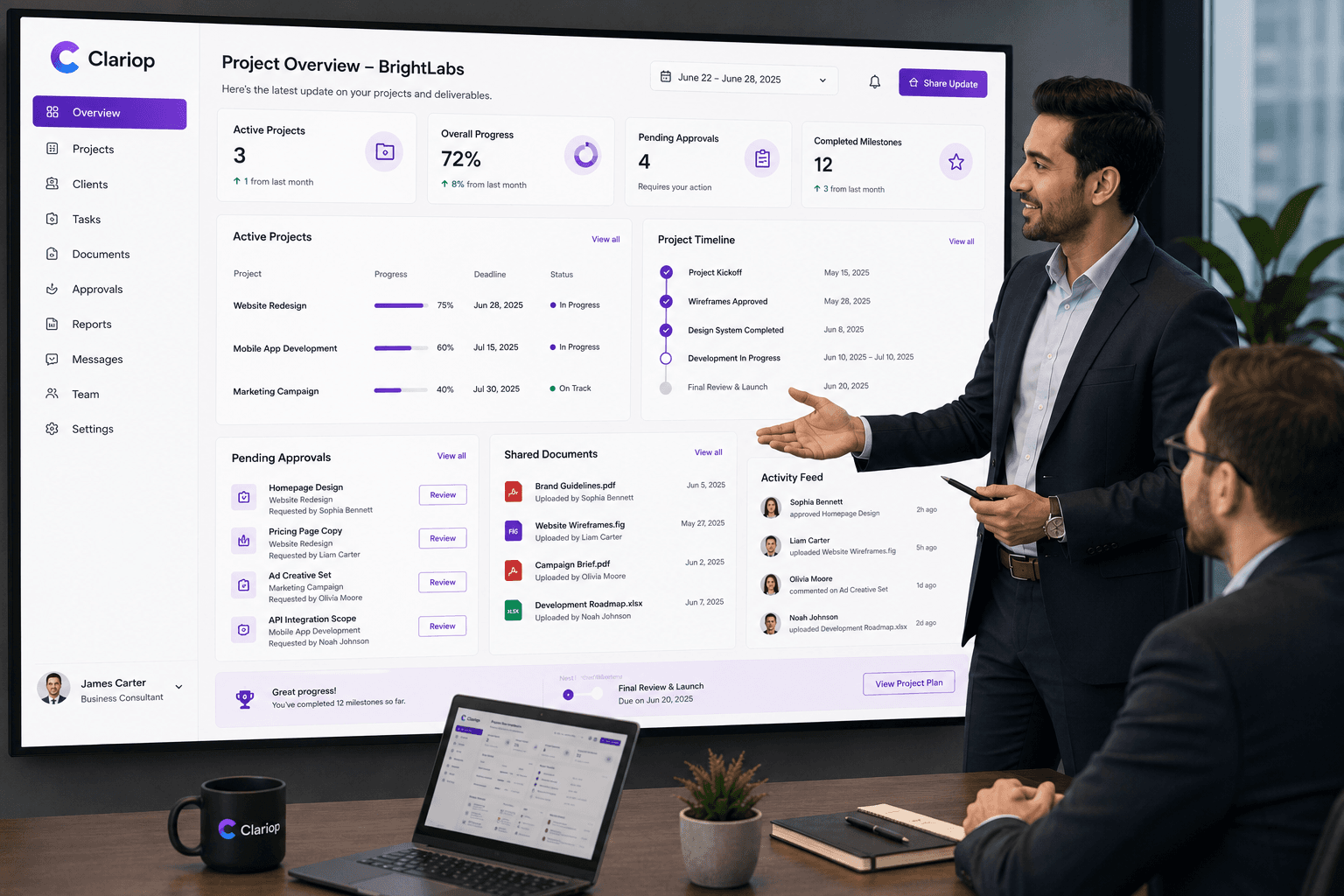
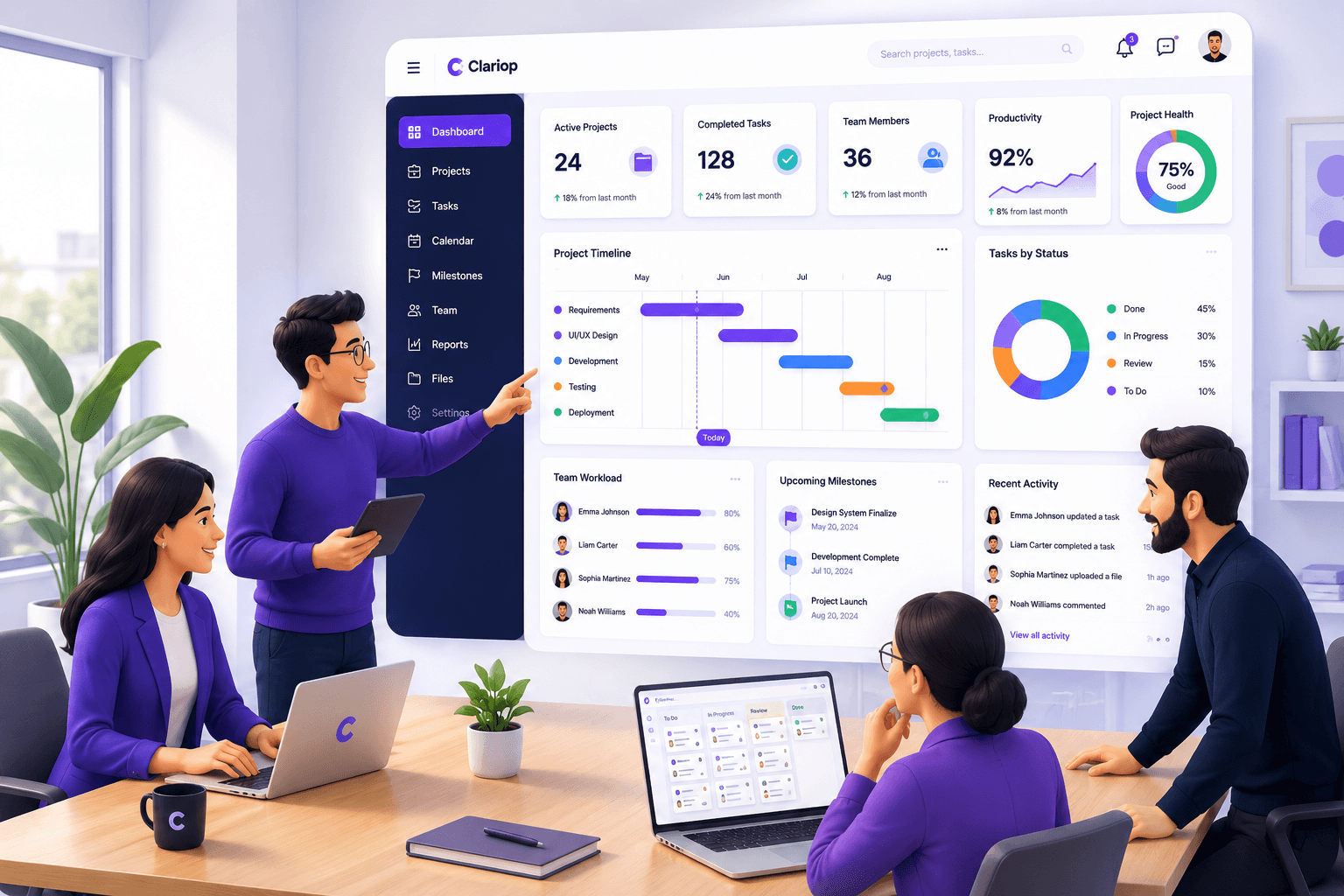
Clariop helps businesses organize every aspect of client delivery from one centralized workspace.
Teams can manage client profiles, projects, tasks, documents, comments, activity updates, and reporting while maintaining complete visibility into ongoing work.
By connecting client management with project management and operations management, Clariop enables businesses to deliver a more organized, transparent, and professional experience without relying on multiple disconnected systems.
Great client management is built through consistency.
Organizations that communicate proactively, organize information effectively, and maintain visibility throughout every project build stronger relationships and earn greater customer trust.
As businesses grow, investing in structured client management processes becomes one of the most effective ways to improve customer satisfaction and support long-term success.
How can businesses improve client management?
By centralizing information, communicating regularly, setting clear expectations, organizing documentation, and using client management software.
Why is communication important in client management?
Consistent communication builds trust, keeps clients informed, and reduces misunderstandings throughout the project lifecycle.
What should client management software include?
It should provide client records, project tracking, task management, document storage, activity updates, reporting, and team coordination.
Can better client management increase customer retention?
Yes. Clients who experience organized communication, timely delivery, and professional service are far more likely to continue working with your business.
Managing client relationships becomes easier when projects, tasks, documents, comments, and progress updates are organized in one place. Start your 30-day free trial with Clariop and provide your clients with the transparency and professionalism they expect.


 James Okafor