Building strong client relationships isn't just about delivering excellent work—it's about delivering an excellent experience.
Clients want to feel informed, valued, and confident that their projects are progressing as expected. Businesses that consistently provide organized communication, clear expectations, and reliable delivery often enjoy stronger client loyalty, repeat business, and positive referrals.
On the other hand, even technically successful projects can leave clients dissatisfied if communication is poor or expectations are unclear.
In this guide, we'll explore ten proven client management best practices that help businesses strengthen relationships, improve service delivery, and build long-term trust.
Clients evaluate more than the final deliverable.
They notice:
- How responsive your team is
- How organized your processes are
- Whether deadlines are respected
- How transparently progress is communicated
- How quickly issues are resolved
A positive client experience builds confidence and encourages long-term partnerships.
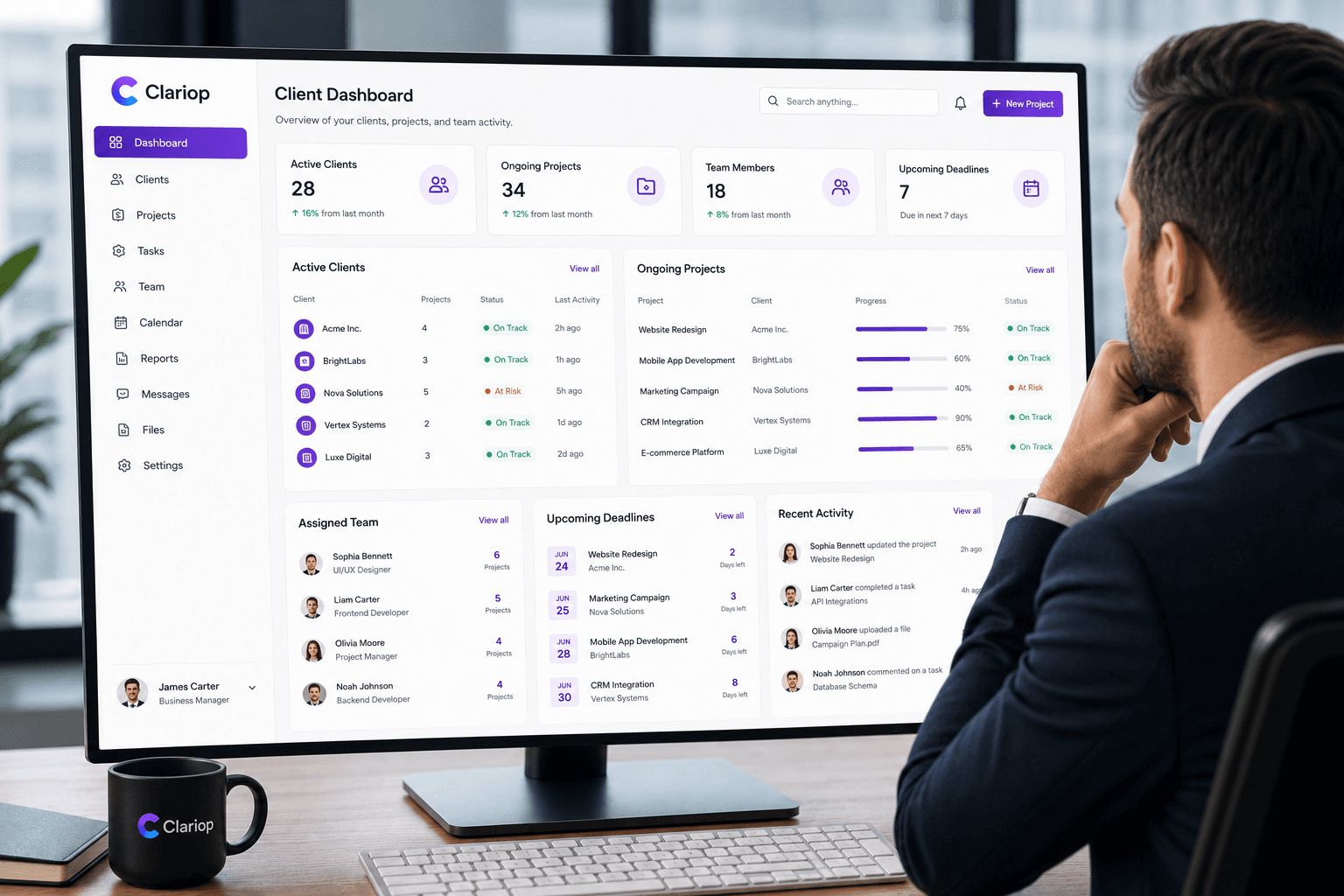
Maintain a centralized profile for each client containing:
- Contact information
- Active projects
- Assigned team members
- Documents
- Meeting notes
- Recent activity
- Pending approvals
Having everything organized in one place improves efficiency and reduces errors.
Successful projects begin with alignment.
Before work starts, clearly define:
- Project objectives
- Deliverables
- Timeline
- Responsibilities
- Approval process
- Communication schedule
Well-defined expectations prevent misunderstandings later.
Don't wait for clients to request updates.
Share progress regularly by communicating:
- Completed milestones
- Current work
- Upcoming activities
- Potential risks
- Next steps
Proactive communication builds trust and reduces uncertainty.
Consistency creates confidence.
Respond to messages promptly, follow agreed processes, and provide updates at predictable intervals.
Reliable communication demonstrates professionalism.
Clients appreciate visibility into ongoing work.
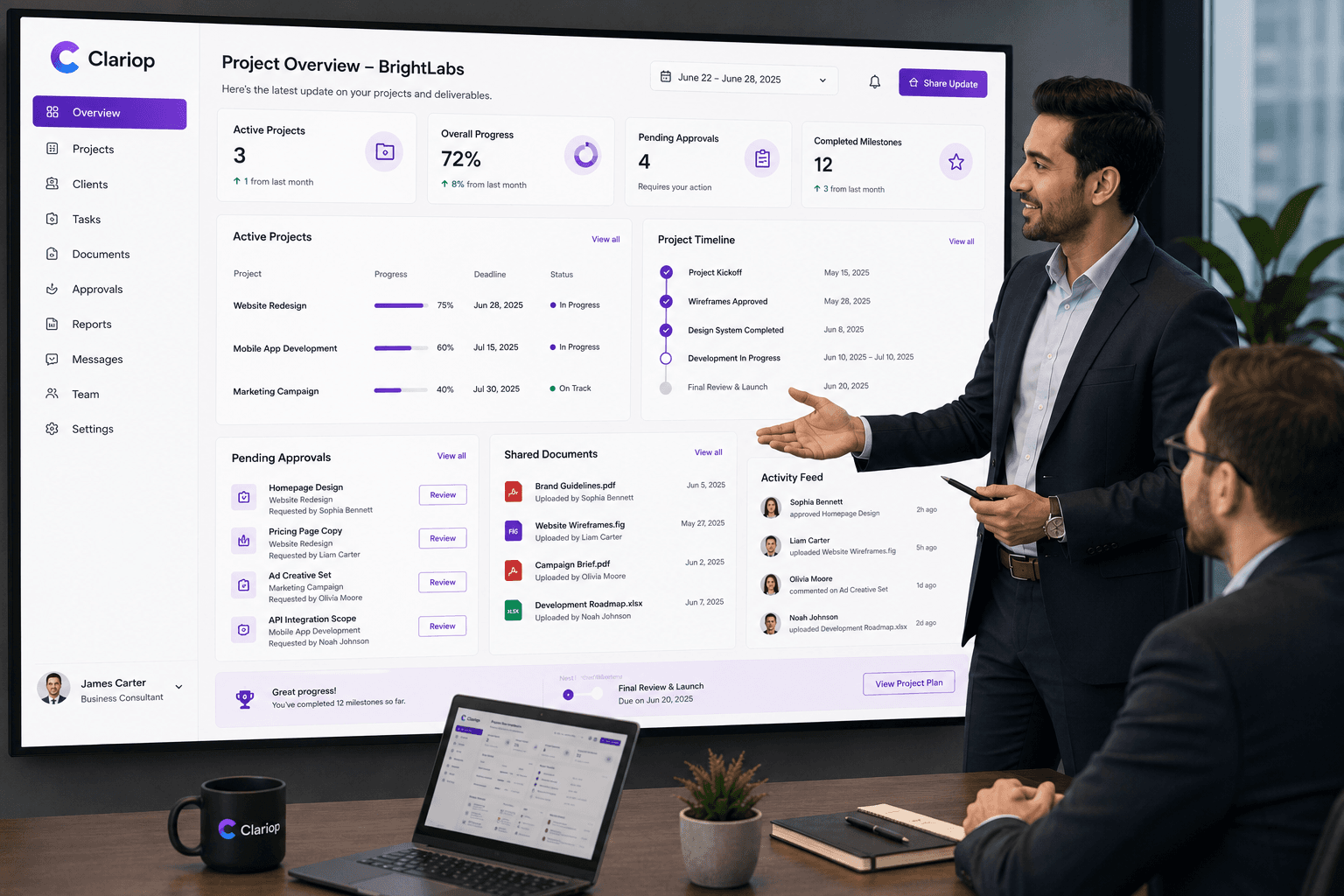
Providing organized project updates allows clients to understand progress without requesting constant status reports.
Transparency reduces anxiety and improves satisfaction.
Verbal agreements are easily forgotten.
Record important decisions, approvals, and scope changes within the project so everyone has a reliable reference point.
Proper documentation prevents future disputes.
Challenges occur in every project.
The difference between excellent and average client management often lies in how quickly problems are acknowledged, communicated, and resolved.
Addressing issues early demonstrates accountability.
Regular feedback helps identify opportunities for improvement before the project ends.
Simple check-ins encourage collaboration and show clients that their opinions matter.
After delivery, conduct a short project review.
Discuss:
- Achievements
- Lessons learned
- Areas for improvement
- Future opportunities
These conversations strengthen long-term relationships and often generate additional business.
As businesses grow, managing multiple clients manually becomes increasingly difficult.
Client management software helps teams:
- Organize client information
- Manage projects
- Track tasks
- Store documents
- Monitor activity
- Coordinate teams
- Generate reports
Everything remains connected within one centralized platform, improving visibility and service quality.
Businesses often weaken client relationships by:
- Communicating inconsistently
- Losing project documentation
- Missing agreed deadlines
- Setting unclear expectations
- Delaying responses
- Managing client information across multiple tools
Recognizing and correcting these issues leads to a more professional client experience.
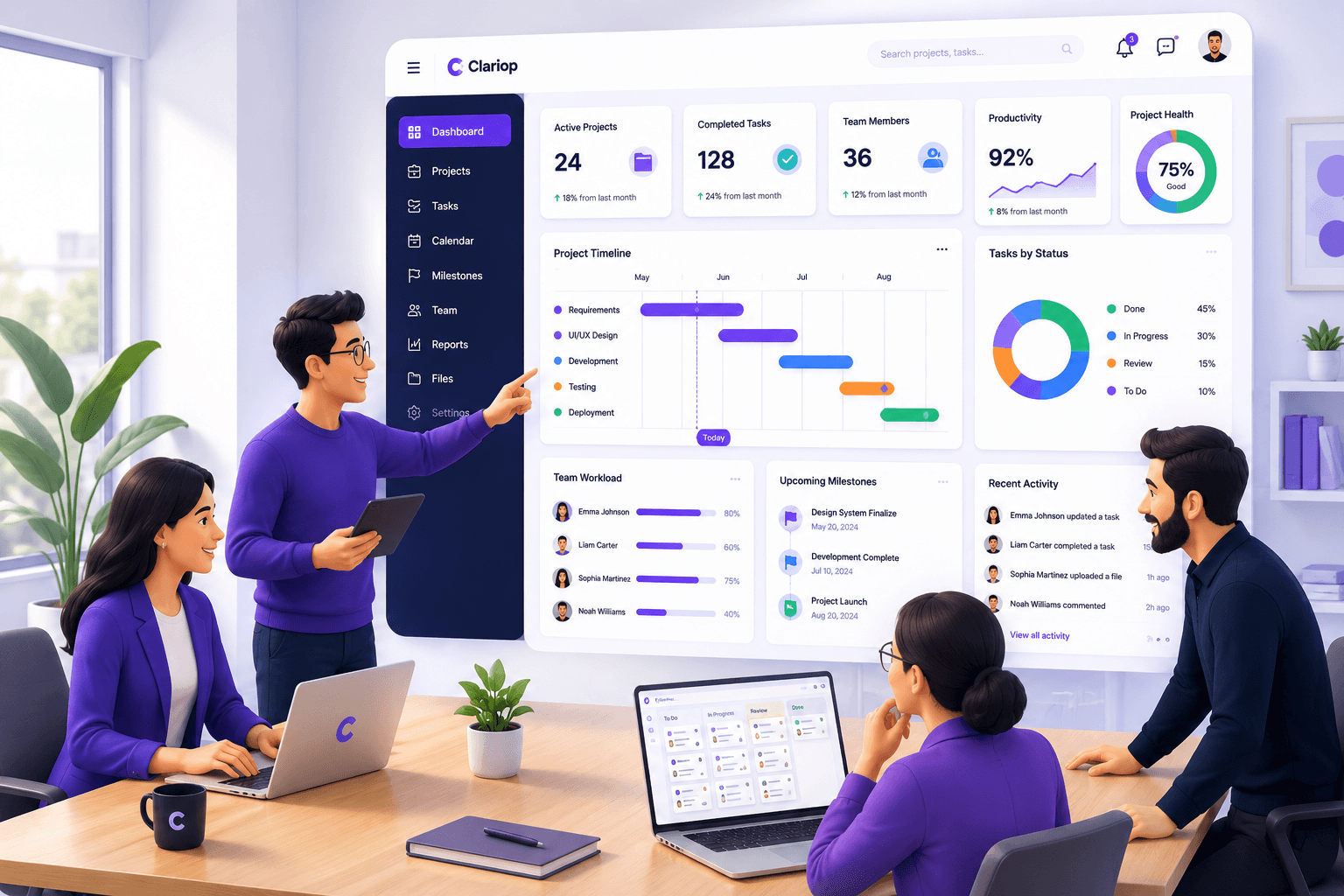
Clariop enables businesses to manage clients, projects, tasks, documents, activity updates, comments, and reporting from one centralized workspace.
Instead of switching between multiple applications, teams can keep client information organized, maintain visibility into project progress, and collaborate more effectively.
By combining client management with project management and operations management, Clariop helps organizations deliver a consistent, transparent, and professional experience throughout the entire client lifecycle.
Outstanding client management is built through consistency, transparency, and organization.
Businesses that invest in structured client management practices not only improve customer satisfaction but also strengthen their reputation, increase client retention, and create opportunities for long-term growth.
Technology alone doesn't build great client relationships—but the right processes supported by the right platform make delivering exceptional service much easier.
What are client management best practices?
Client management best practices are proven methods that help businesses organize client relationships, improve communication, strengthen trust, and deliver projects more effectively.
Why is proactive communication important?
Keeping clients informed throughout a project reduces uncertainty, builds confidence, and improves the overall client experience.
How often should businesses communicate with clients?
The frequency depends on the project, but regular updates at agreed intervals help maintain transparency and trust.
Can client management software improve customer satisfaction?
Yes. By centralizing client information, projects, documents, and progress updates, businesses can respond more quickly, stay organized, and deliver a more consistent client experience.
Exceptional client experiences begin with organized processes, transparent communication, and complete visibility. Start your 30-day free trial with Clariop and manage clients, projects, tasks, documents, and operational workflows from one centralized platform designed to help your business grow.

 James Okafor