Winning a new client is only the beginning of a successful business relationship. The real challenge lies in consistently delivering value, maintaining clear communication, meeting expectations, and building long-term trust.
Businesses that manage clients effectively often enjoy stronger relationships, higher customer retention, repeat business, and more referrals. On the other hand, poor client management can lead to missed deadlines, communication gaps, dissatisfied customers, and lost opportunities.
Client management is about creating a structured approach to every stage of the client journey—from onboarding to project delivery and ongoing support.
In this guide, you'll learn what client management is, why it matters, and how businesses can build stronger, more productive client relationships.
Client management is the process of organizing, managing, and maintaining relationships with clients throughout the entire business lifecycle.
It includes activities such as:
- Client onboarding
- Project planning
- Task coordination
- Progress updates
- Document management
- Communication
- Issue resolution
- Project delivery
- Long-term relationship building
The goal is to provide clients with a consistent, professional, and transparent experience.
Today's clients expect more than just quality work.
They also expect:
- Clear communication
- Regular progress updates
- Professional organization
- Timely delivery
- Transparency
- Quick responses
Businesses that consistently meet these expectations build stronger relationships and increase customer loyalty.
Poor client management often results in:
- Miscommunication
- Missed deadlines
- Lost documents
- Delayed approvals
- Reduced trust
- Negative customer experiences
Every client should have a centralized profile containing:
- Company information
- Contact details
- Active projects
- Team members
- Documents
- Communication history
Having all information in one place saves time and reduces confusion.
2. Clear Project Visibility
Clients appreciate knowing the status of their work.
Providing visibility into project progress helps build confidence and reduces the need for constant follow-up emails.
3. Consistent Communication
Communication should be proactive rather than reactive.
Regular updates keep clients informed about:
- Completed work
- Upcoming milestones
- Delays (if any)
- Required approvals
- Next steps
Consistent communication builds trust.
4. Well-Defined Expectations
Successful client relationships begin with clear expectations.
Before work starts, both parties should understand:
- Scope of work
- Timeline
- Deliverables
- Responsibilities
- Approval process
Clear expectations reduce misunderstandings throughout the project.
5. Efficient Issue Resolution
Challenges are inevitable.
What matters most is how quickly and professionally they are addressed.
Keeping issues organized and documented helps businesses resolve them efficiently while maintaining client confidence.
Many businesses experience similar challenges as they grow.
Client details spread across emails, spreadsheets, and personal notes make it difficult to find accurate information.
Poor Communication
Irregular updates often cause clients to feel disconnected from project progress.
Missed Deadlines
Without structured planning and visibility, important deliverables can easily be delayed.
Lack of Accountability
When responsibilities aren't clearly assigned, tasks may be overlooked or completed late.
Organizations that consistently deliver excellent client experiences usually follow these practices:
- Keep client information centralized.
- Assign dedicated project owners.
- Share regular progress updates.
- Document important decisions.
- Maintain organized project records.
- Respond promptly to client queries.
- Review client feedback after project completion.
These practices improve transparency and strengthen long-term relationships.
As businesses expand, manually managing client relationships becomes increasingly difficult.
Client management software helps organizations:
- Organize client records
- Manage client projects
- Track progress
- Store documents
- Coordinate teams
- Maintain communication history
- Improve operational visibility
Instead of juggling multiple tools, businesses gain one centralized workspace for managing client relationships.
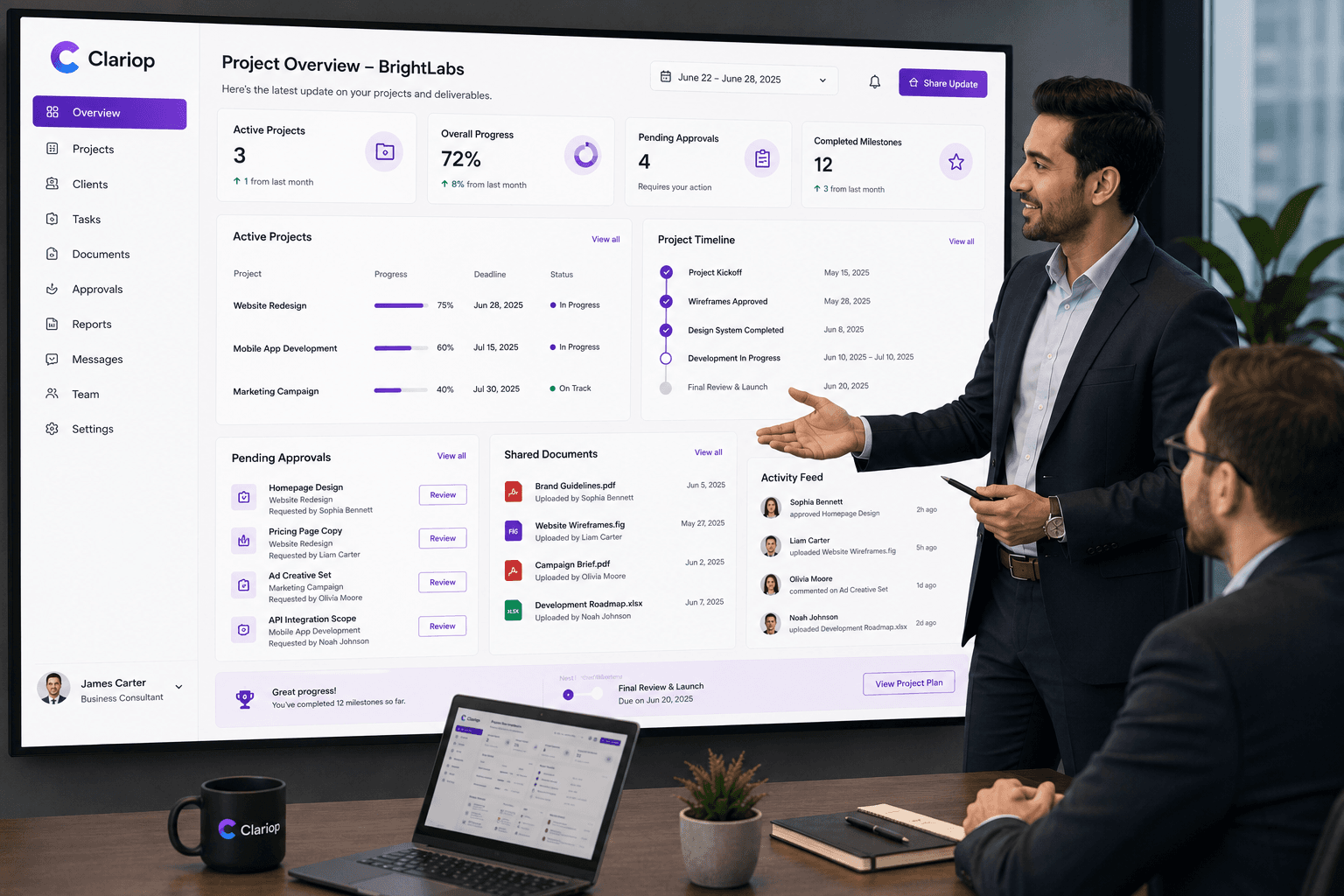
Clariop helps businesses manage clients alongside their projects, tasks, teams, documents, and operational workflows.
Managers can create dedicated client profiles, organize related projects, assign responsibilities, monitor progress, and keep project information centralized.
By bringing client management together with project and operations management, Clariop reduces administrative complexity while improving transparency and accountability.
Whether you're serving a handful of clients or managing hundreds of ongoing engagements, Clariop helps you deliver a more organized and professional client experience.
Strong client management is about much more than delivering work on time.
It involves creating organized processes, maintaining transparent communication, managing expectations, and consistently delivering value.
Organizations that invest in structured client management build stronger relationships, increase customer satisfaction, and create long-term opportunities for business growth.
What is client management?
Client management is the process of organizing, maintaining, and improving relationships with clients throughout the entire business lifecycle.
Why is client management important?
It improves communication, increases customer satisfaction, strengthens trust, and helps businesses deliver projects more efficiently.
What should client management software include?
It should include client records, project management, task tracking, document storage, activity updates, reporting, and team coordination.
Is client management different from CRM?
Yes. CRM primarily focuses on sales and customer acquisition, while client management focuses on managing active client relationships, project delivery, communication, and ongoing service after the sale.
Great client experiences begin with organization, transparency, and consistent communication. Start your 30-day free trial with Clariop and manage clients, projects, tasks, documents, and teams from one centralized platform designed to help your business deliver exceptional service.



 James Okafor