Every successful organization depends on efficient operations. Whether you're delivering services, developing software, managing client projects, or coordinating internal teams, your ability to organize daily operations directly impacts business performance.
Many businesses focus heavily on sales and marketing but overlook the importance of operational efficiency. As a result, teams often struggle with scattered information, duplicated work, communication gaps, and inconsistent processes.
Operations management provides the structure needed to keep people, projects, tasks, and resources working together toward common business goals.
In this guide, you'll learn what operations management is, why it matters, and how businesses can improve operational efficiency through better planning, visibility, and technology.
Operations management is the process of planning, organizing, monitoring, and improving the activities that keep a business running efficiently.
It focuses on coordinating people, projects, tasks, processes, resources, and information to deliver consistent results while making the best use of available time and resources.
Effective operations management helps organizations:
- Improve productivity
- Reduce operational delays
- Increase visibility
- Standardize workflows
- Strengthen accountability
- Deliver better customer experiences
Rather than managing individual projects in isolation, operations management provides a complete view of how the entire organization functions.
As businesses grow, operational complexity increases.
Multiple departments, ongoing projects, client requests, and daily responsibilities create challenges that spreadsheets and disconnected tools cannot effectively manage.
Without structured operations management, organizations often experience:
- Inefficient workflows
- Missed deadlines
- Duplicate work
- Limited visibility
- Poor resource allocation
- Slow decision-making
- Reduced customer satisfaction
A strong operational framework helps teams stay organized and ensures that business activities remain aligned with strategic objectives.
Successful operations management is built on several key elements.
Project Planning
Every business initiative begins with a well-defined project that includes objectives, timelines, responsibilities, and measurable outcomes.
Task Management
Projects move forward only when individual tasks are properly assigned, prioritized, and completed.
Effective task management creates accountability and keeps work progressing.
Team Coordination
Coordinating people across departments ensures that everyone understands priorities, responsibilities, and project status.
Shared visibility reduces confusion and improves collaboration.
Process Standardization
Consistent processes help organizations deliver predictable results.
Standard operating procedures reduce errors, improve quality, and simplify onboarding for new employees.
Reporting and Visibility
Managers need accurate information to make informed decisions.
Operational reporting provides insight into project progress, workload distribution, deadlines, and overall business performance.
Many businesses encounter similar operational issues.
Disconnected Systems
Information spread across emails, spreadsheets, and multiple applications creates confusion and wastes valuable time.
Lack of Visibility
Managers struggle to understand:
- Which projects are on schedule
- Which tasks are delayed
- Who is overloaded
- Where operational bottlenecks exist
Inconsistent Processes
When each team follows different procedures, efficiency declines and errors become more common.
Poor Accountability
Without clearly assigned ownership, important work is often delayed or overlooked.
Organizations that consistently perform well typically follow these practices:
- Standardize business processes.
- Keep projects and tasks centralized.
- Define clear ownership for all responsibilities.
- Monitor operational performance regularly.
- Encourage transparency through activity updates.
- Review workload distribution frequently.
- Continuously improve processes based on performance data.
These practices help businesses operate more efficiently while supporting long-term growth.
Manual operational management becomes increasingly difficult as organizations expand.
Operations management software helps businesses:
- Centralize projects and tasks
- Improve visibility
- Coordinate teams
- Monitor progress
- Generate reports
- Organize documentation
- Track operational performance
Instead of managing work across disconnected systems, organizations gain one unified operational workspace.
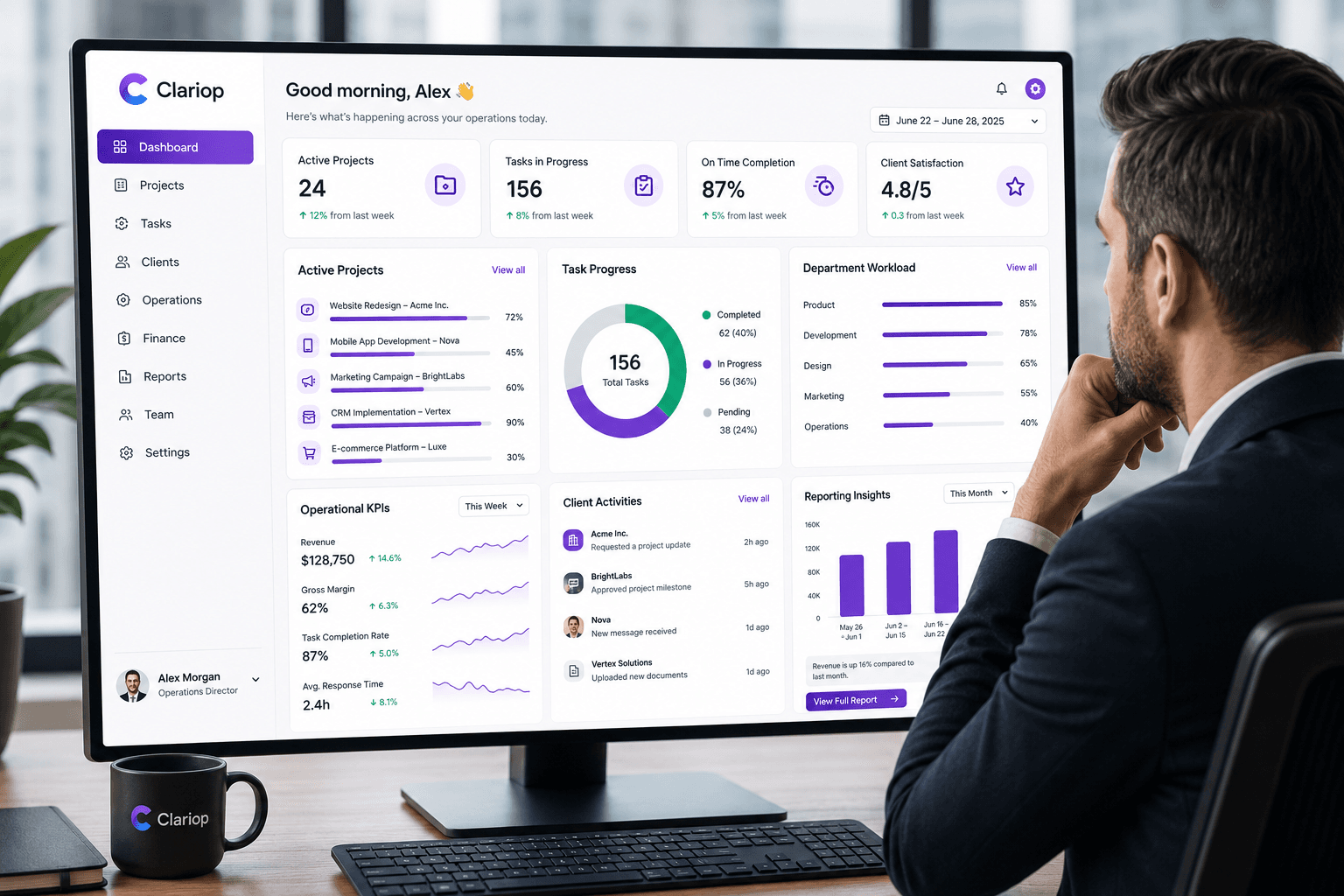
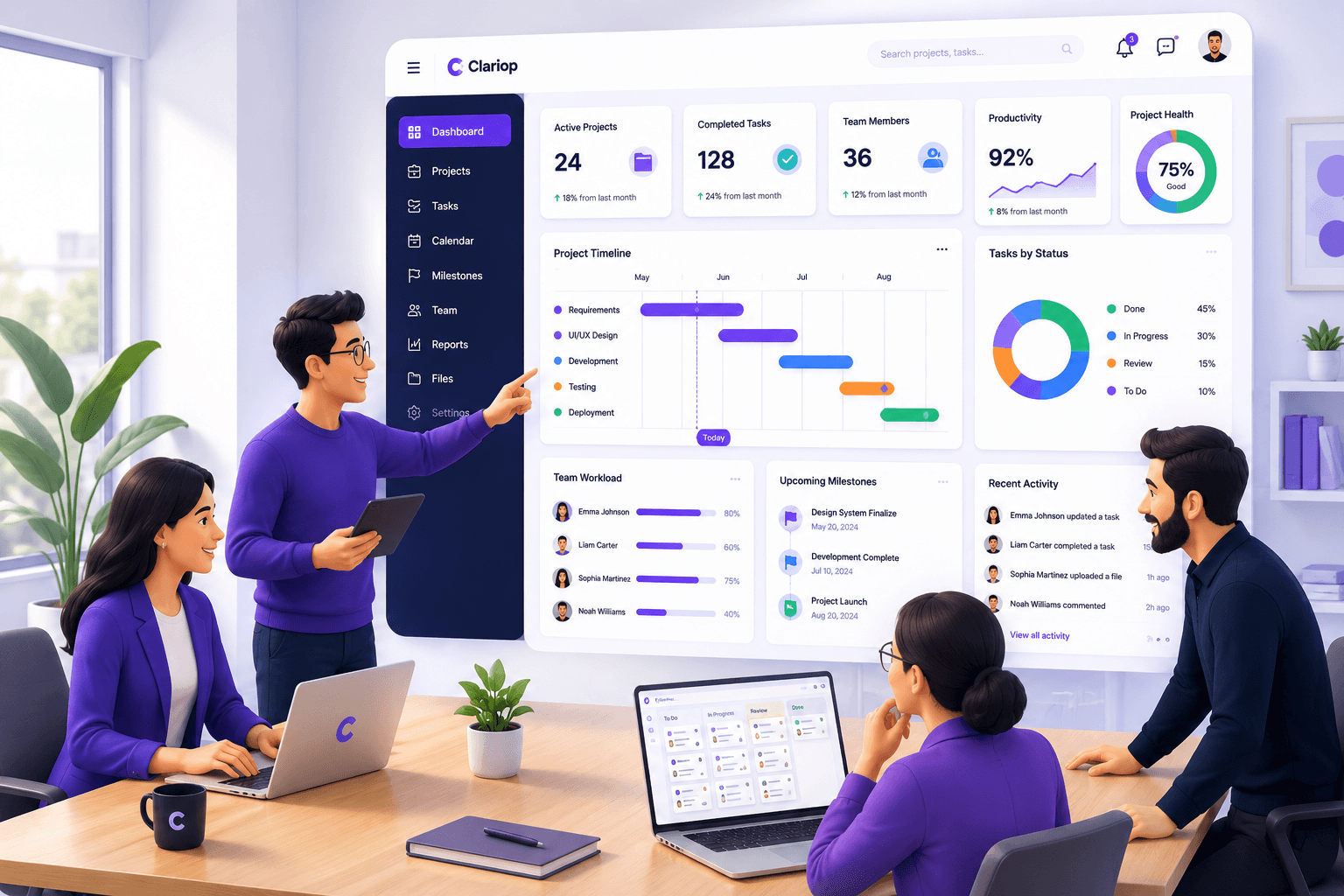
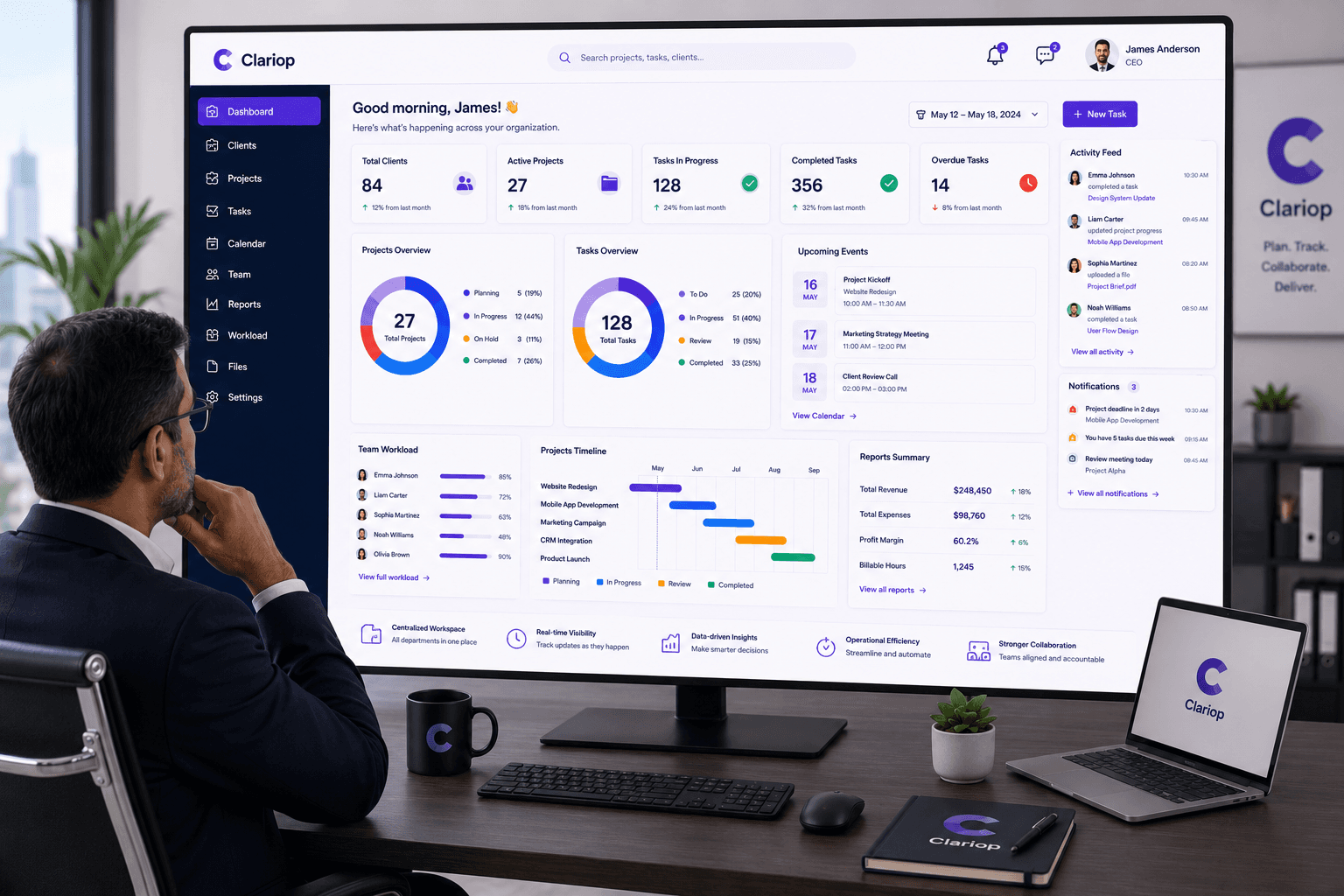
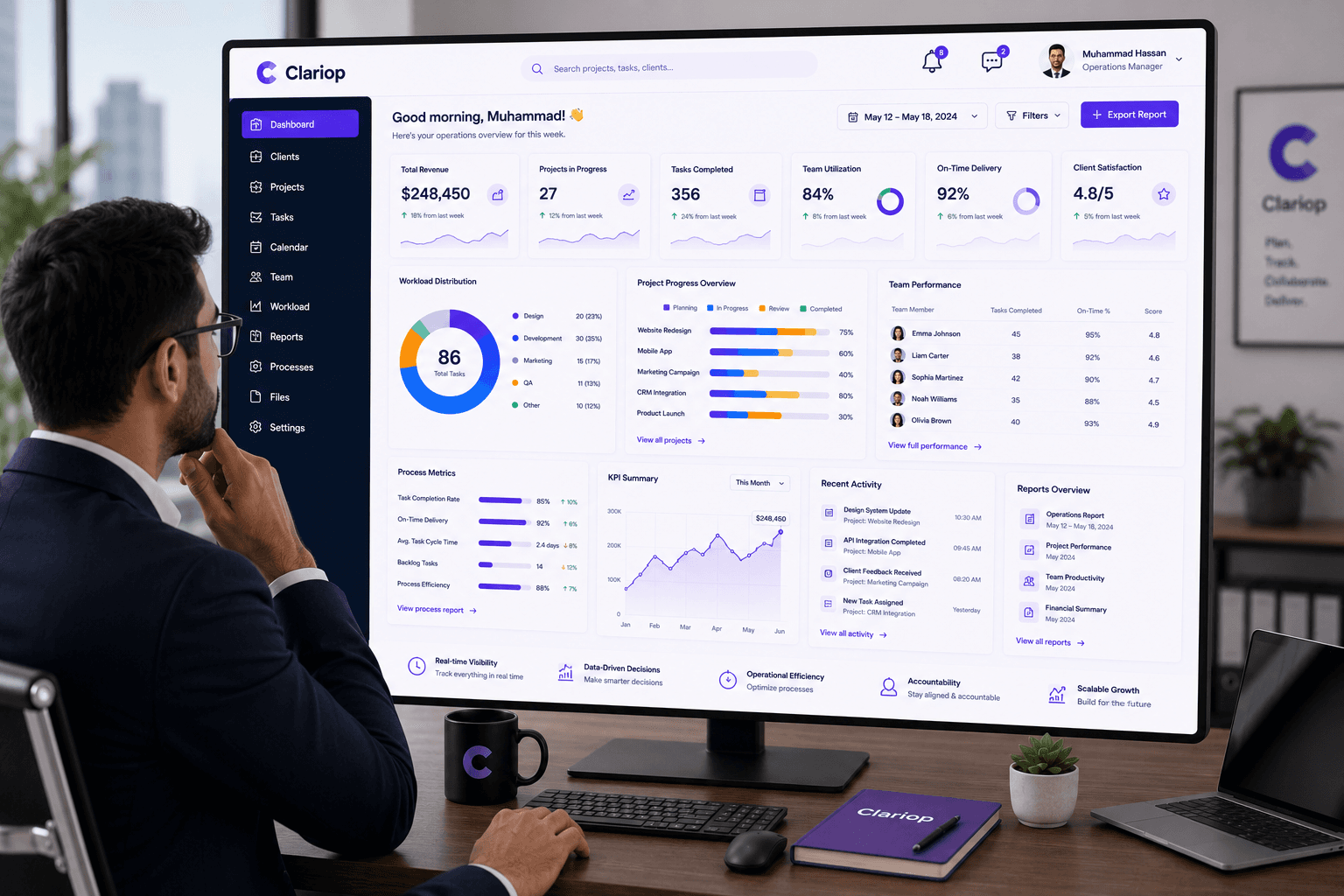
Clariop is designed to simplify operations management by bringing together projects, tasks, team coordination, documents, calendars, activity updates, and reporting into one centralized platform.
Rather than focusing only on project management, Clariop provides businesses with a broader operational view that helps leaders monitor progress, improve accountability, and make informed decisions.
Whether you're managing internal operations or delivering services to clients, Clariop provides the visibility and structure needed to operate more efficiently.
Operations management is the foundation of a well-organized business.
Organizations that improve visibility, standardize workflows, coordinate teams, and centralize information are better positioned to grow, adapt, and deliver consistent results.
As operational complexity continues to increase, investing in structured operations management becomes a competitive advantage rather than an operational necessity.
What is operations management?
Operations management is the process of planning, organizing, monitoring, and improving business activities to increase efficiency, productivity, and operational performance.
Why is operations management important?
It improves visibility, strengthens accountability, standardizes processes, and helps businesses deliver consistent results.
What does operations management software do?
It centralizes projects, tasks, teams, documents, reporting, and operational workflows into one platform.
Is operations management different from project management?
Yes. Project management focuses on individual projects, while operations management oversees the broader day-to-day activities and processes that keep an organization running efficiently.
Efficient operations begin with complete visibility. Start your 30-day free trial with Clariop and manage projects, tasks, teams, clients, documents, calendars, and reports from one centralized operations platform designed to help your business grow.

 Priya Nair